The 2026 Deepfake Mandate: Navigating the Era of Digital Sovereignty and Algorithmic Accountability
On January 15, 2026, the global tech landscape witnessed a regulatory execution that redefined corporate risk. A leading social media conglomerate was served an administrative fine amounting to 10% of its global annual turnover—approximately €4.2 billion—following its failure to comply with 'Autonomous Content Verification' protocols. This wasn't a warning shot; it was the first casualty of the Digital Identity Protection Law. The era of treating deepfakes as 'minor misinformation' is dead. In its place stands a legal regime that treats synthetic identity theft with the same severity as high-level financial fraud and treason.
From Reactive Policy to Proactive Sovereignty: The 2026 Shift

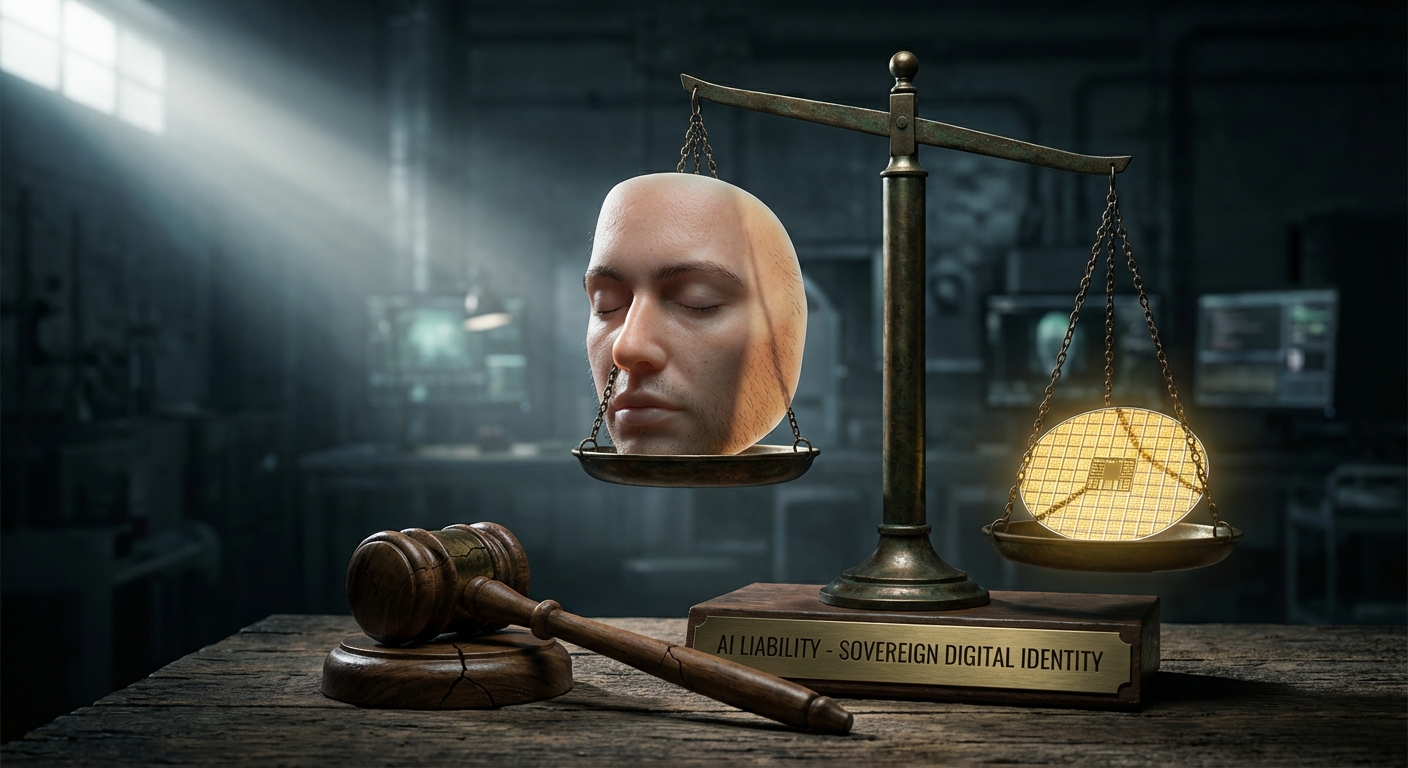
Anatomy of a Digital Sovereignty Breach: How Proactive AI Shields are now mandated to preemptively neutralize synthetic exploits before they reach the public consciousness.
In 2026, the legal definition of the self has expanded. The codification of 'Cognitive Liberty' has elevated an individual’s digital likeness—their voice, facial geometry, and behavioral patterns—to the status of a fundamental human right. Under the revised Penal Code, specifically the overhauled Article 134, the creation of non-consensual synthetic content is no longer a civil dispute; it is a felony. This transition marks the end of the 'Wild West' of AI generation.
The enforcement of these rights is handled by Specialized Digital Rights Courts. These are not traditional courtrooms bogged down by years of discovery. They operate via Agentic Workflows—autonomous forensic AI systems that act as technical prosecutors. These agents ingest suspected content, perform deep-layer artifacts analysis, and generate a legally binding forensic report in milliseconds. The court's role has shifted from questioning if a crime happened to determining the scale of the algorithmic liability.
The VOP Protocol: The Cryptographic DNA of Reality

The VOP Protocol Decoded: Real-time Cryptographic Verification exposed through neural transparency layers, ensuring every pixel carries a traceable lineage.
The 2026 Mandate centers on the Verified Origin Protocol (VOP). This is not a simple watermark that can be cropped out. It is a multi-layered cryptographic seal embedded into the latent space of the generative model itself. Every piece of synthetic content produced must carry this 'Digital DNA,' which logs the model's architecture, the training weights used, and the verified identity of the user who initiated the generation.
- Autonomous Filtering Layers: Content platforms are now legally required to integrate Agentic inspection layers into their ingestion pipelines. These 'Gatekeeper Agents' quarantine any unlabeled synthetic content instantly. If a platform’s AI fails to catch a deepfake that subsequently causes market volatility or reputational ruin, the platform is held jointly and severally liable for the damages.
- The Revolution of the 'Burden of Proof': Perhaps the most radical shift is the reversal of the evidentiary burden. In the pre-2026 era, a victim had to prove a video was fake—a near-impossible task as technology perfected mimicry. Today, the Burden of Proof lies with the uploader. If content is flagged as 'high-risk' by the VOP sensors, the uploader must prove its authenticity through verifiable metadata or face immediate takedown and prosecution.
Behavioral Cloning: The New Frontier of Criminality
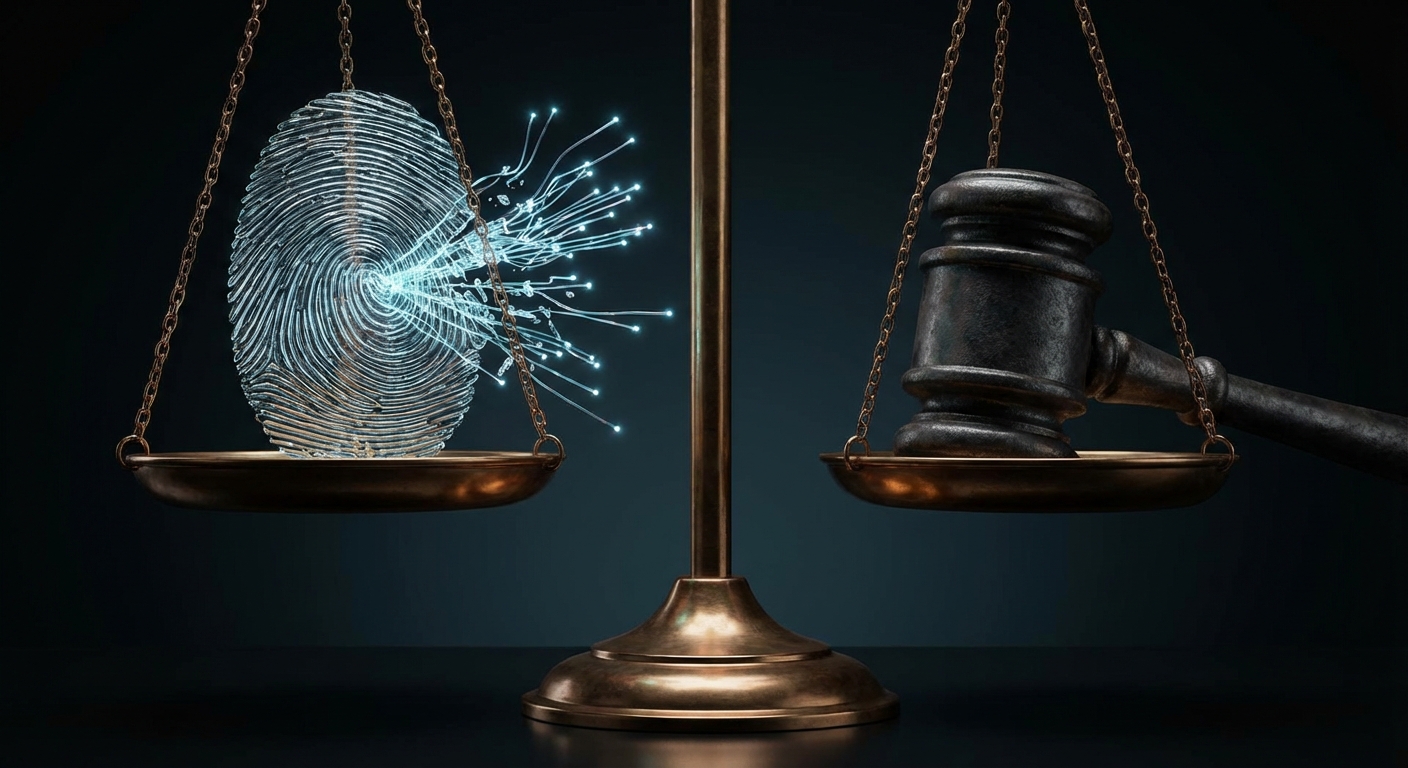
The Legal Death of the Imposter: How Behavioral Cloning regulations trace and incinerate algorithmic mimicry used for social engineering.
We have moved beyond static images. The 2026 Mandate introduces the crime of 'Behavioral Cloning.' Imagine an autonomous agent that has scraped your entire digital history—your emails, your LinkedIn tone, your speech cadences—and uses this to create a 'Shadow Self.' This clone doesn't just look like you; it acts like you, capable of calling your CFO to authorize a wire transfer or manipulating your family. The law now recognizes this as 'Identity Erasure,' carrying mandatory minimum prison sentences that exceed traditional fraud. This regulation demands that any commercial use of deep synthesis technology undergo Rigorous Algorithmic Auditing to ensure no behavioral mimicry occurs without explicit, time-bound consent.
The NextFactor Imperative: Compliance as Survival
In this high-stakes environment, 'Ethical AI' is no longer a corporate social responsibility slogan; it is a survival requirement. At NextFactor AI, we provide the architectural armor necessary to navigate these mandates. To avoid the catastrophic liability of the 2026 Law, companies must implement three non-negotiable pillars:
- Autonomous Compliance Agents: We deploy Agentic Workflows that continuously audit your internal and external content streams against the VOP standards.
- Reputation Shielding: Our systems monitor the global digital landscape for 'Behavioral Clones' of your executives, providing real-time neutralization before a crisis scales.
- Algorithmic Traceability: We ensure every AI-generated asset within your enterprise is cryptographically sealed, protecting your brand from being the source of an unlabeled deepfake.
The 2026 Deepfake Mandate has ended the era of 'moving fast and breaking things.' Now, if you break reality, you pay the price—in billions and in years. In this new world, protecting your digital sovereignty is the only way to safeguard your future.
Secure your enterprise against the 2026 Mandate. Contact us for a full Algorithmic Liability Audit.