
🚀 TL;DR: The 30-Second Briefing
Yann LeCun is launching AMI Labs, a $1 billion venture aimed at evolving AI from mere text prediction to 'World Models' that understand physical reality. This investment could redefine autonomous systems across industries, from aerospace to robotics.
Yann LeCun’s AMI Labs: Can a $1 Billion ‘World Model’ Gamble Anchor AI to Reality?
While the AI landscape has been dominated by the whirlwind of Large Language Models (LLMs), Yann LeCun, Meta’s Chief AI Scientist, has long criticized these systems as 'statistical parrots.' Now, his critique has evolved into a massive commercial and scientific challenge. Stepping away from his full-time role at Meta, LeCun has founded Advanced Machine Intelligence (AMI) Labs to ensure AI understands not just syntax, but physical reality. A record-breaking $1.03 billion seed investment proves that this vision isn't just an 'academic fantasy'—it’s an industrial imperative.
The LLM Dead-End and JEPA Architecture: Why Data Alone Isn't Enough

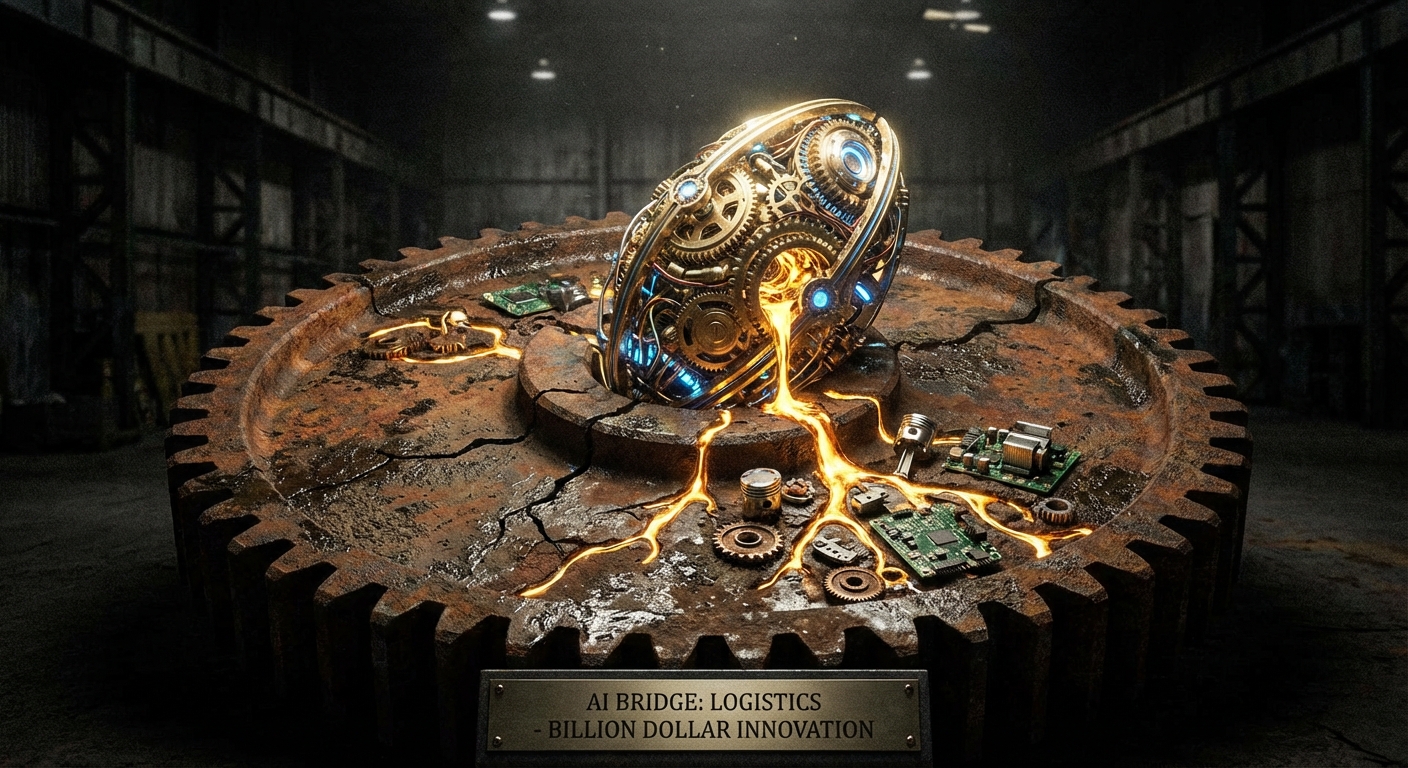
Visual: Bridging the gap between text prediction and physical understanding.
Current AI systems are built on 'next-token prediction,' having ingested trillions of words. However, according to LeCun, this creates a form of intelligence that lacks 'common sense.' AMI Labs is built upon the Joint-Embedding Predictive Architecture (JEPA) to break this bottleneck.
What is JEPA? Simply put, JEPA is an architecture that allows AI to learn about the world the way a baby does: through observation. A child doesn't learn gravity through physics formulas; they learn it by seeing a glass fall when they let go. JEPA focuses on predicting 'what happens next' in video data, allowing the model to internalize abstract physical laws like mass, momentum, and causality—going far beyond mere pixels.
"The greatest missing piece in AI today is 'physical intuition.' Current models can read a thousand physics textbooks and still not 'feel' that a vase will shatter if it slides off the table. AMI is attempting to turn that intuition into a mathematical framework."
Industrial Bottlenecks: A Perspective from NextFactor AI
Visual: The evolution of robotics from programmed commands to autonomous reasoning.
From an industry standpoint, the void left by language-only models in autonomous systems is glaring. At NextFactor AI, one of the biggest hurdles we’ve observed in automotive logistics is the struggle of digital optimization to adapt to physical chaos. A warehouse robot can plan a perfect route, but if it cannot predict the 'physical consequence' of an unexpected oil spill or a falling crate, operations grind to a halt.
AMI Labs’ 'World Models' aim to pair these autonomous systems with Agentic Workflows, allowing robots to do more than just follow commands; they will make independent decisions based on shifting physical conditions. This marks the transition of AI from a 'chatbot' to a 'real-world operator.'
Zero-Error Visions in Aerospace and Biomedicine

Visual: High-fidelity simulations for aerospace and biotech.
The deep understanding targeted by AMI Labs could have a disruptive impact on sectors where the margin for error is zero:
- Aerospace: Digital twin models that could reduce simulation costs and testing cycles by up to 80%. Systems that manage jet engine wear and tear through physical stress simulations rather than just historical log data.
- Biomedicine: Modeling molecular interactions not just as chemical formulas, but as physical collisions and energy exchanges in 3D space, potentially accelerating drug discovery from years to months.
- Autonomous Vehicles: Moving beyond simple object labeling to 'predictive driving' systems that understand: 'If I turn the wheel this way on this surface, the vehicle will slide at this specific angle.'
The Billion-Dollar Bet: Is March 2026 a Prophecy?
If AMI Labs realizes its vision, technology historians may point to March 11, 2026—the projected date when the full impact of this investment will be felt—as the moment AI entered its 'Reasoning Era.' However, it remains a high-stakes gamble. A $1 billion R&D budget is a massive weight for a company without a commercial product. Investors like Bezos Expeditions and Nvidia aren't just funding a chatbot; they are investing in the physical key to Artificial General Intelligence (AGI).
Ultimately, Yann LeCun’s move is an attempt to pull AI out of our screens and into our factories, laboratories, and skies. At NextFactor AI, we are tracking the business implications of this technological leap, preparing our partners for systems that don't just 'talk,' but truly 'understand and act.'
🚀 Future-Proof Your Business for the Autonomous Era
Discover high-performance autonomous systems tailored to your industry with NextFactor AI. Contact our expert team today to build your AI roadmap.
Book Your Free Strategy Session →🚀 Ready to Scale Your Business with AI?
At NextFactor AI, we develop custom autonomous solutions for your brand.
Get a Custom Quote Today →