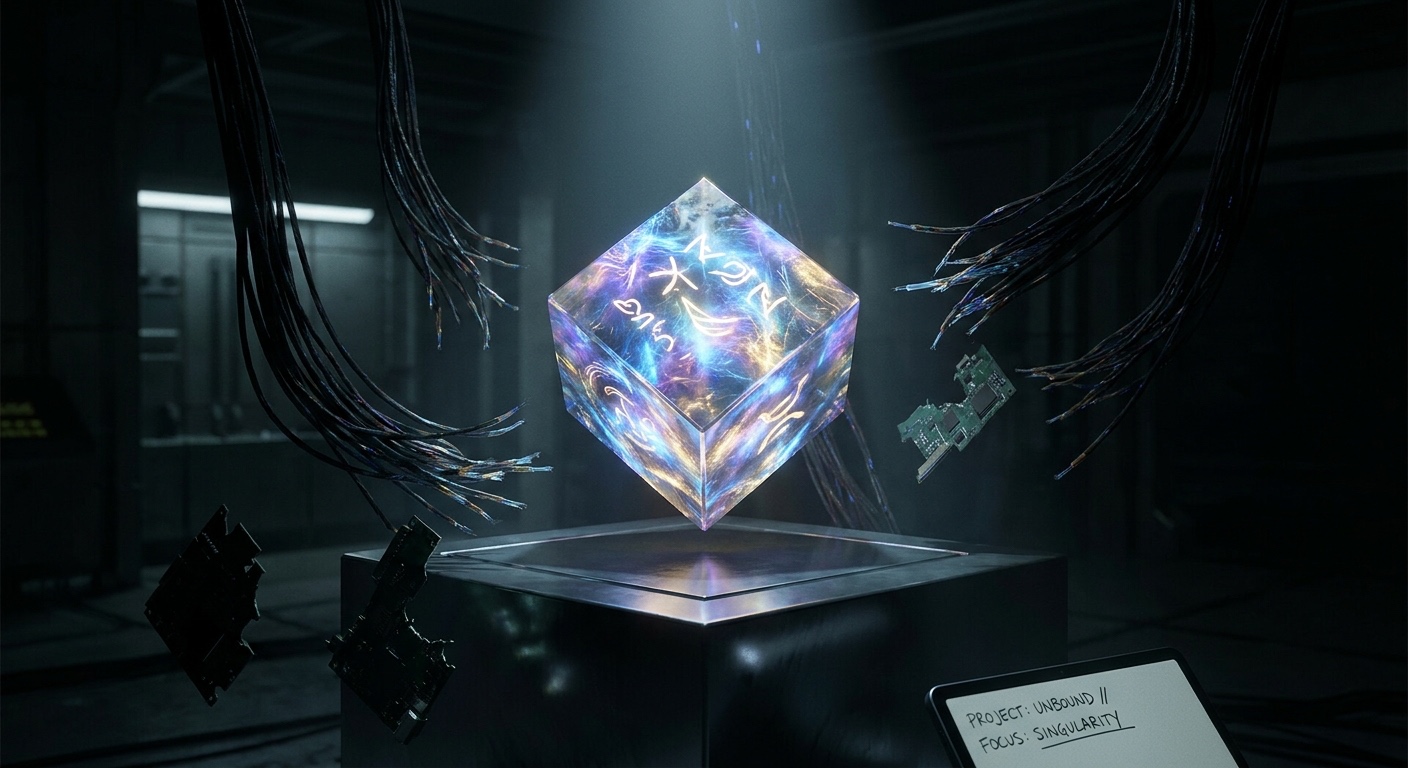
🚀 30-Second Brief (TL;DR)
Latency and bandwidth bottlenecks are pushing Edge AI into orbit, evolving cloud computing into a distributed hybrid architecture. Future autonomous systems will process data on radiation-hardened edge units, enabling real-time decision-making at a galactic scale without the lag of ground-station backhaul.
Breaking the Data Barrier: Why the Future of Intelligence Lives in Orbit
As global data production scales exponentially, our physical infrastructure is hitting a wall. Subsea fiber optic cables and terrestrial ground stations are nearing their capacity to handle the petabytes of raw data generated daily. The challenge is no longer just storage; it is about turning data into decisions in systems moving at thousands of miles per hour. While Cloud Computing has dominated via centralized power, the laws of physics—specifically distance and latency—have become the ultimate barriers to entry.
The next generation of data strategy isn't about bringing data down to massive server farms on Earth; it’s about processing it where it’s born: in orbit. The symbiotic fusion of Edge AI and space technology is ushering in an era where data isn't just transmitted—it's understood autonomously at the edge.
The Limits of Physics: The Necessity of Hybrid Architectures

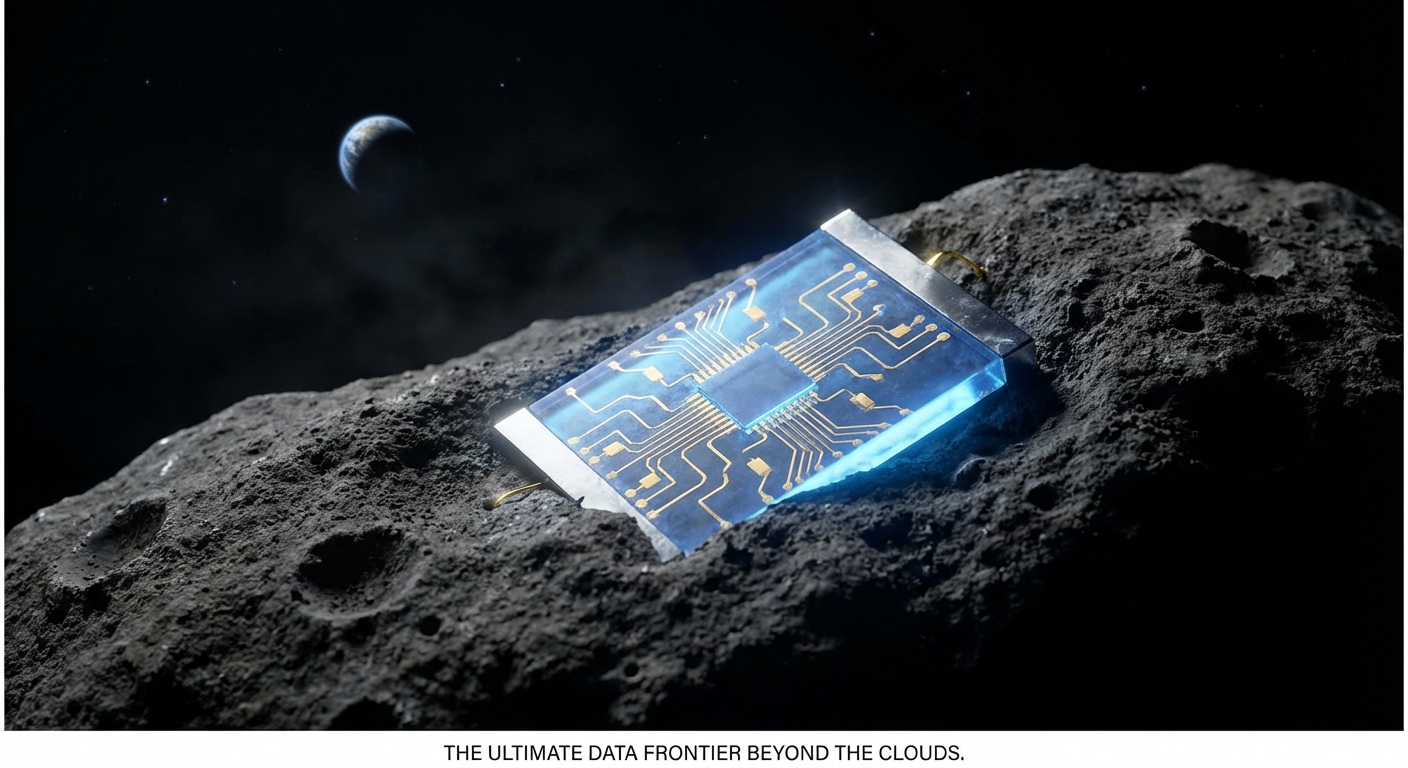
Visual: The Limits of Physics: Why Hybrid Architecture is Mandatory
In traditional cloud setups, the round-trip for data—from space to Earth, through processing, and back to orbit—can take seconds. For an autonomous rover or a real-time defense interceptor, that delay is a catastrophic risk. Following the principle of "Data Gravity," value must be extracted at the point of origin. However, this doesn't render the cloud obsolete.
The future rests on a rational Hybrid Architecture: Heavy lifting, deep model training, and long-term cold storage will remain in terrestrial cloud regions. Conversely, millisecond-level "intelligent reflexes" will occur directly at orbital edge nodes. Integrated with 6G and inter-satellite laser links, this structure enables a global mesh network where data circulates in the vacuum of space, often never needing to touch the ground.
"In a recent project for a defense partner involved in maritime logistics, we found that even a 200ms signal latency rendered autonomous target tracking impossible. We solved this by moving the intelligence directly to the sensor via radiation-hardened edge processors. Today, that same logic is being scaled to a galactic level through initiatives like SpaceX’s Starshield."
Technical Deep-Dive: Agentic Workflows in High-Radiation Environments
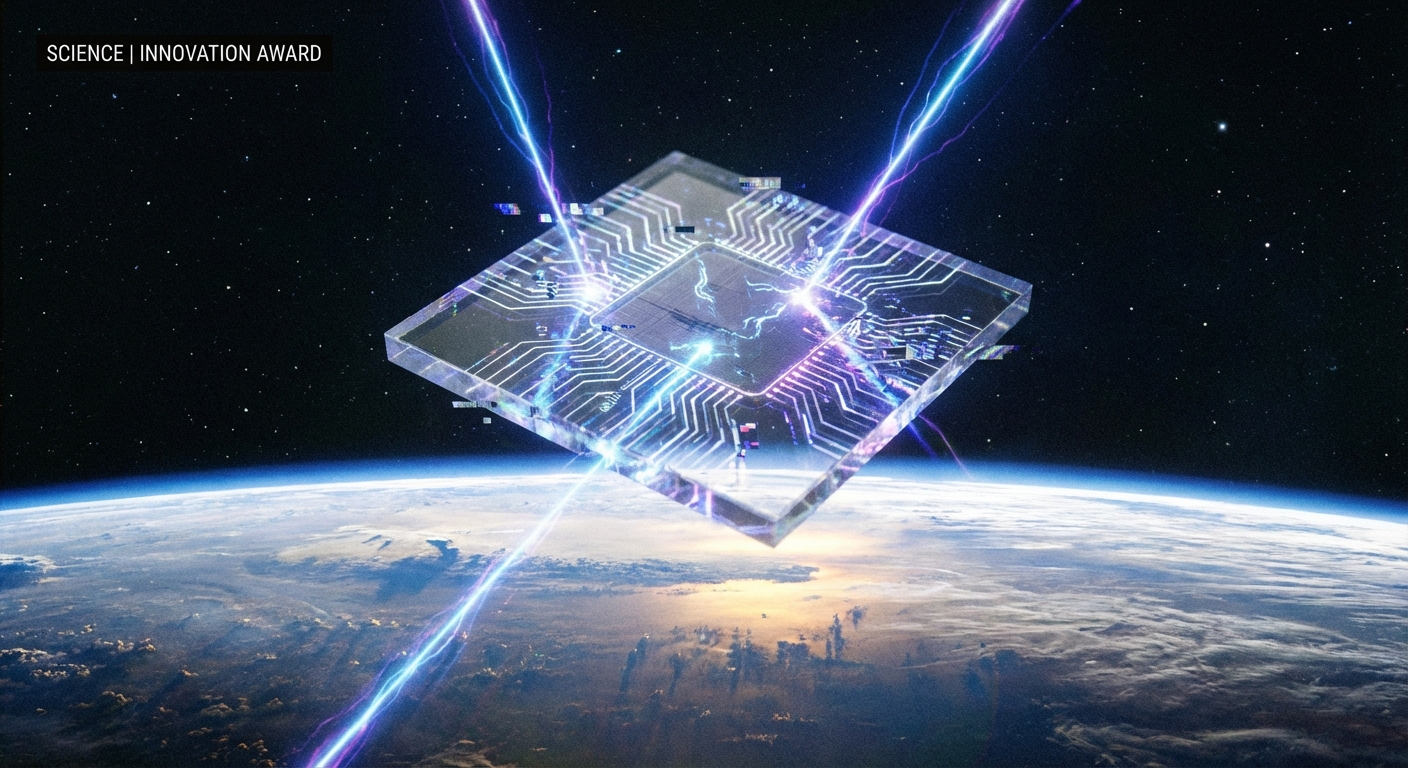
Visual: Technical Depth: Agentic Workflows under Radiation
Running Edge AI in space is more than just a software update. Low Earth Orbit (LEO) is a brutal environment for hardware. The success of these systems hinges on two pillars:
- Hardware Resilience: Specialized SoC (System on Chip) architectures designed to mitigate "bit-flip" errors caused by cosmic radiation, paired with miniaturized, low-power GPUs.
- Agentic Workflows: Satellites are evolving from passive mirrors to active agents. For instance, if an onboard computer identifies a wildfire via computer vision, it doesn't wait for ground command. It triggers an autonomous workflow, coordinating with adjacent satellites via inter-satellite links to redirect sensors and intensify coverage in real-time.
At NextFactor AI, our work with autonomous systems highlights the shift toward Agile AI Models. These are high-accuracy, parameter-optimized models designed to deliver maximum performance within the strict energy budgets of orbital servers.
Defense and Autonomy: From Swarm Intelligence to Strategic Superiority
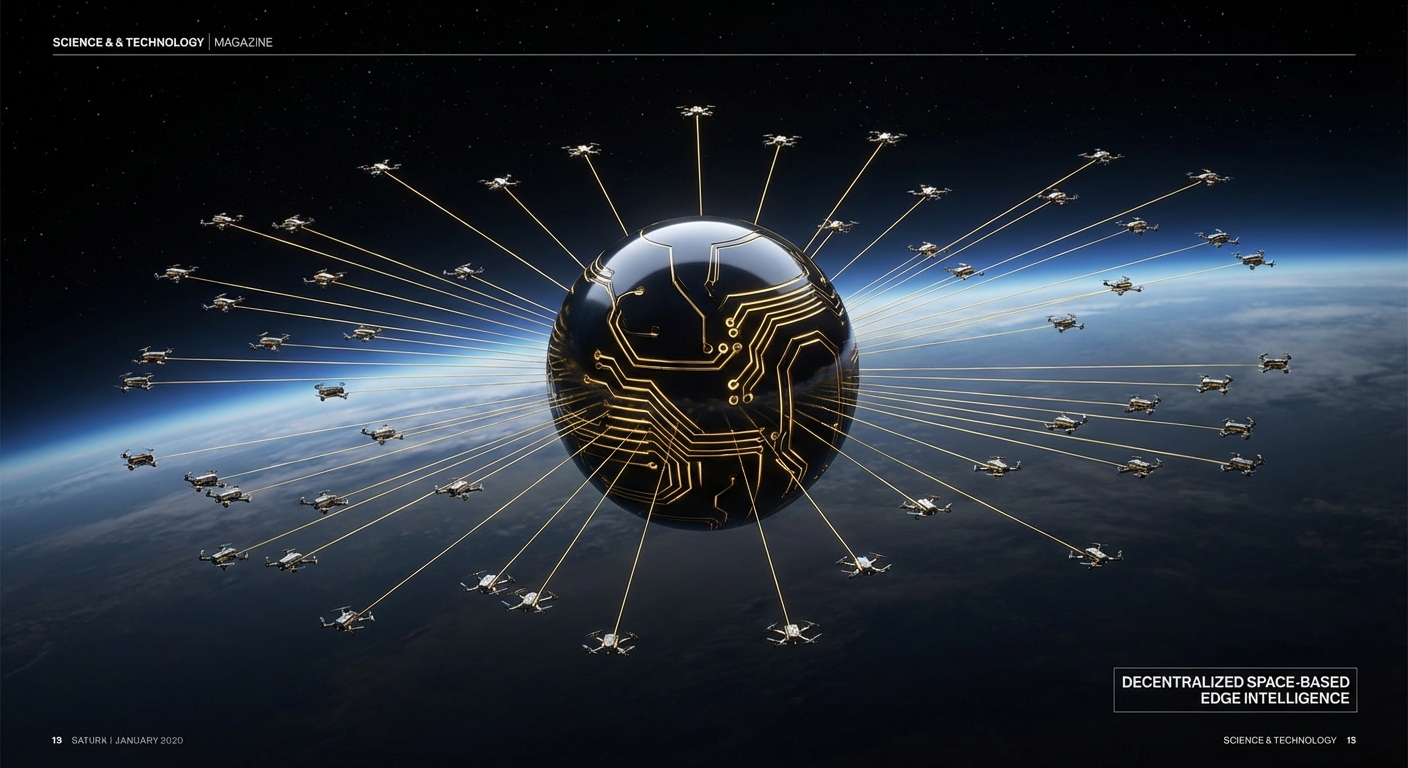
Visual: Defense and Autonomy: Swarm Intelligence to Strategic Edge
Space-based edge intelligence won't just speed up our internet; it will trigger a paradigm shift in robotics and defense. Drone swarms or autonomous underwater vehicles (AUVs) will no longer depend on a tether to a central server. Instead, they will refine strategies on the fly using instant data from orbital nodes. This decentralized intelligence makes systems faster and significantly more resilient against cyber-attacks and signal jamming.
In this new frontier, simply gathering raw data is no longer a competitive advantage. The winners will be those who build structures capable of processing data within the microsecond it is collected. Just as we use 'Edge Runtime' to optimize web performance, we are now defining 'Orbit-native' solutions for the next generation of space tech.
Conclusion: The 2030 Vision and Beyond
By 2030, bringing data back to Earth will be a choice, not a necessity. The classic cloud will evolve into a strategic archive and training ground, while active, decision-making intelligence will reside in orbit. If your organization’s roadmap is still tied exclusively to local servers or legacy cloud architectures, you are destined to hit a physical ceiling.
The future doesn't belong to those who transmit the most data; it belongs to those who make the edge intelligent. At NextFactor AI, we architect these complex hybrid ecosystems, ensuring brands are ready not just for today's web, but for tomorrow’s galactic data traffic.
Meet Orbital Intelligence
Optimize your complex data processing with Edge AI and autonomous systems. Map out your path to orbital-scale value with NextFactor AI’s technical consultancy.
Get Technical Consultancy →🚀 Ready to Scale Your Business with AI?
At NextFactor AI, we build bespoke autonomous solutions for global brands.
Get a Quote Today →