🚀 Quick Summary (TL;DR)
As of April 2026, Japan has unveiled an ambitious strategy targeting 30% of the global physical AI market by 2040. This vision is bolstered by the nation's robotics legacy, massive government investments, and Microsoft's $10 billion commitment to infrastructure and talent development.
Japan's Physical AI Gambit: Targeting 30% of the Global Market by 2040
As of April 7, 2026, Japan's ambitious new target on the global technology stage commands attention: the nation aims to capture 30% of the physical artificial intelligence (Physical AI) market by 2040. This is more than just a market share goal; it's the declaration of a strategic vision set to profoundly impact industrial transformation, economic growth, and societal well-being.
So, what exactly does Physical Artificial Intelligence entail? Essentially, it encompasses systems capable of physically interacting with their environment, perceiving, learning, planning, and making autonomous decisions. This covers a wide spectrum, from robotic arms performing complex assembly tasks on production lines to robots operating with human-exceeding precision in surgical procedures, autonomous vehicles managing inventory in logistics warehouses, and even Agentic Workflow integrated drones operating within smart city infrastructures. Given Japan's deep-rooted legacy in industrial robotics and its global leadership in high-precision component manufacturing, it's clear that this objective is not merely an aspiration, but a transformative strategy built on a solid foundation and born out of a global imperative.
From the vantage point of this critical date, let's explore Japan's advantages on this ambitious path, the challenges it faces, and its strategic collaborations with global giants like Microsoft.
Japan's Innate Advantages for Physical AI: A Blend of Heritage and Innovation

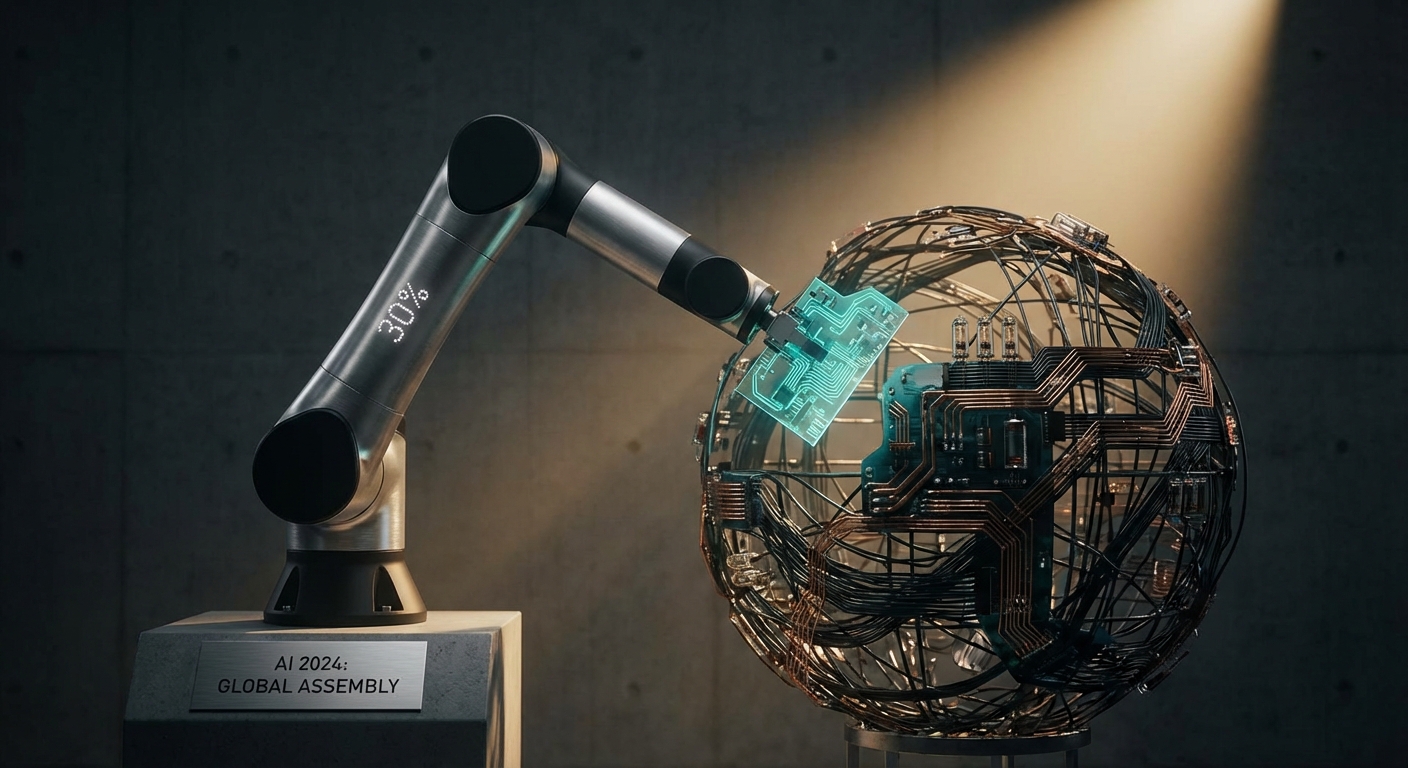
Image: Japan's Innate Advantages for Physical AI: A Blend of Heritage and Innovation
It's worth noting that Japan isn't starting from a blank slate on this grand objective. The country has been at the heart of robotic technology for decades. Its dominance in industrial robotics is astonishing: as of 2022, approximately 70% of the global industrial robot market belongs to Japanese manufacturers [Source 1]. This acts not just as a springboard for physical AI, but effectively a launchpad. The existing infrastructure, accumulated knowledge, and manufacturing capacity provide an invaluable foundation for developing the next generation of AI-integrated robots and autonomous systems.
"Japan's expertise in high-precision components – the critical physical interface between AI and the real world – is like a strategic fortress."
— Yamanaka [Source 1]
This "strategic fortress" analogy really says it all. The heart of physical AI beats not just in software, but also in the high-precision sensors, actuators, and other hardware components that allow AI models to process data and translate it into real-world action. Japan's unique expertise in this area translates into a significant competitive advantage. This critical integration of hardware and software forms the foundation of modern Physical AI applications. For instance, in autonomous inspection systems, the success of the system depends as much on efficient AI models as it does on the precise hardware integration capable of collecting data and directing robotic arms.
And most importantly, there's an "imperative" driving this move. Japan's shrinking workforce and increasing productivity pressures are compelling companies to deploy AI-powered robots in factories, warehouses, and critical infrastructure [Source 1]. In essence, robots aren't coming to steal jobs, but rather to fill roles that no one wants or is able to do. This demonstrates that physical AI is not merely a technological luxury, but a vital solution for the nation's future.
Massive Investments and Strategic Partnerships: A Roadmap to the Goal
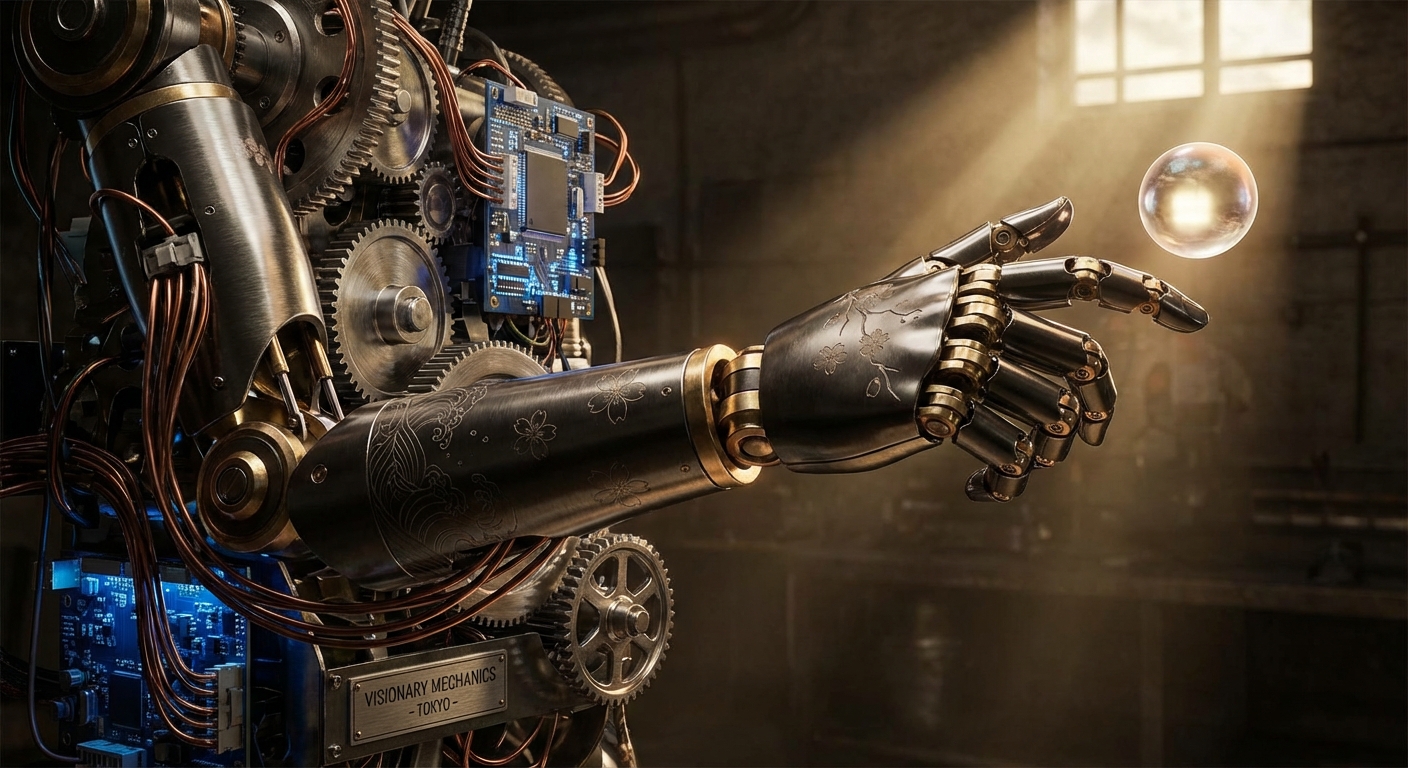
Image: Massive Investments and Strategic Partnerships: A Roadmap to the Goal
Such an ambitious goal naturally requires support not only from existing advantages but also from enormous investments and strategic collaborations. The Japanese government has taken the lead in this regard. The Ministry of Economy, Trade and Industry (METI) aims to build the domestic physical AI sector and achieve the 30% market share target. The administration led by Prime Minister Sanae Takaichi has prioritized science and technology, committing to an investment of 60 trillion Yen (approximately $400 billion) over 5 years [Source 1, 2, 5].
One of the most significant supporters of this grand plan is Microsoft. The tech giant announced a massive $10 billion investment in Japan for AI infrastructure and cybersecurity between 2026-2029 [Source 2, 3, 4, 5]. This is not just a transfer of funds but a strategic partnership that will strengthen the nation's technological backbone.
- Local Collaborations: As part of this investment, Microsoft will collaborate with local firms like SoftBank and Sakura Internet to expand Japan-based AI computing capacity. This will allow companies and government agencies to access Microsoft Azure services while keeping their sensitive data within the country [Source 3, 4]. This localization is critical for data security and sovereignty.
- Talent Development: Additionally, partnerships with Japanese tech giants such as NTT Data, NEC, Fujitsu, and Hitachi will support the training of 1 million AI professionals and the development of local large language models [Source 4].
- Infrastructure and Data Priority: These investments aim to overcome limitations in computing resources and provide access to AI-ready infrastructure. Japan possesses irreplaceable scientific data in fields such as healthcare, material science, and manufacturing. When combined with the right infrastructure, this data will act as a powerful catalyst for AI innovation [Source 2]. The critical importance of local data infrastructures and security for enterprise AI solutions is a sentiment echoed by many nations and organizations pursuing similar strategies.
Workforce Challenges and a Talent Development Drive: Engineering the Next Generation of Robots
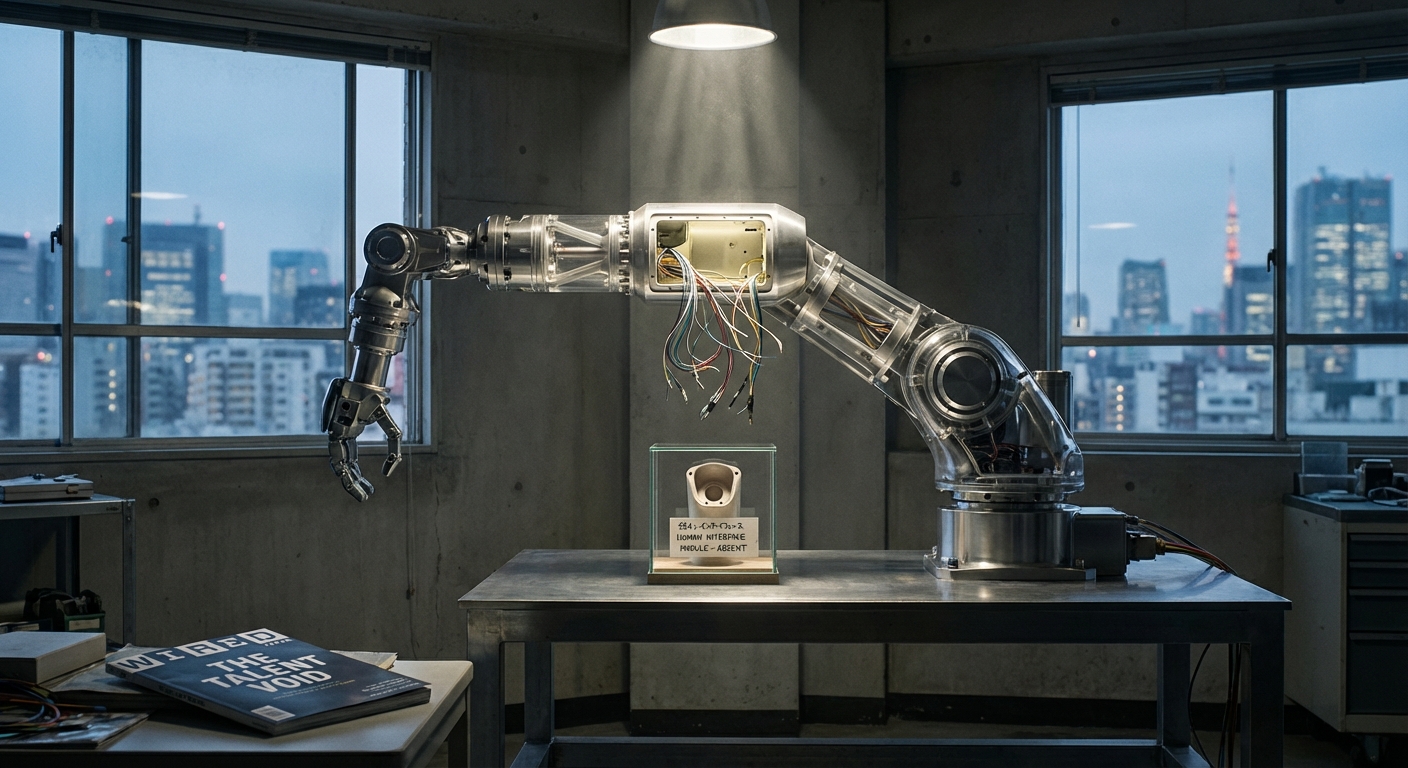
Image: Workforce Challenges and a Talent Development Drive: Engineering the Next Generation of Robots
Every grand vision faces obstacles, and for Japan, one of these is the workforce. METI forecasts a staggering workforce deficit of 3.26 million in AI and robotics by 2040 [Source 2, 3]. This is one of the biggest challenges, not just for today but for the future. However, Japan is determined to turn this situation into an opportunity.
This is where Microsoft's training commitment comes into play: The company aims to expand Japan's talent pool by targeting to train 1 million engineers and developers in the country by 2030 [Source 2, 3, 4]. The fact that over 3.4 million people have previously acquired AI skills demonstrates their capacity in this area. These programs will focus on enterprise technology and frontline industrial sectors, aiming to create expertise across all layers of physical AI. This once again highlights that the talent gap is one of the biggest hurdles for AI and automation projects on a global scale. Therefore, providing not only technological solutions but also training and consulting support for teams to adapt and become proficient in these new technologies during integration processes is crucial.
Indeed, while 67% of Japanese executives feel pressure to increase productivity, approximately 80% anticipate a shift towards AI-human collaboration [Source 2, 3]. This suggests that AI will not entirely take over jobs, but rather foster a partnership that augments human capabilities and creates new business models. With the acceleration of AI adoption nationwide, Japan is preparing for a new industrial era where humans and robots work in harmony.
Global Competition and Japan's Differentiated Approach: A New Game in the Physical Realm
The AI arena is like an international chess board, with each country making its strategic moves. China is making significant strides in humanoid robotics; for example, firms like UBTech accounted for 90% of global humanoid robot shipments in 2025 and are investing in advanced autonomous systems like "Agentic AI" [Source 9, 10]. In this domain, particularly Agentic AI – systems capable of defining their own goals, making decisions and acting autonomously in dynamic environments, and managing complex tasks – creates a critical differentiation. The US, on the other hand, leads in the service layer and market development, often excelling with software-centric integrated business models [Source 1].
So, how will Japan differentiate itself in this global race? This is where a truly visionary aspect comes into play: Japan is focusing on system-level optimization through the deep integration of AI models with high-precision hardware [Source 1]. This means not only developing excellent software but also intricately weaving that software into the physical architecture of the robots and machines it will operate. This approach could offer significantly superior performance and reliability in the physical AI world compared to software-heavy models. Much like every instrument in an orchestra plays in perfect harmony, Japan is ensuring the synchronized operation of hardware and software. This is not just a technological strategy but also a reflection of the nation's cultural DNA in robotics and precision engineering.
A Forward Look: Japan's Global AI Vision and Beyond
Japan's target of capturing 30% of the physical artificial intelligence market by 2040 represents not just an economic expectation but a bold vision promising societal and industrial transformation. While achieving this goal will bring significant challenges like the talent gap and global competition, the nation's deep-rooted industrial strength, massive government-backed investments, and strategic collaborations with tech giants like Microsoft will play a key role in overcoming these obstacles.
Japan's unique approach, focusing on the deep integration of high-precision hardware and advanced AI models, has the potential to establish a global benchmark in the era of physical AI. The coming decades point to a brand-new industrial reality where physical robotic systems, not just software algorithms, combine with autonomous decision-making capabilities. Japan is steadily advancing to transform demographic and economic imperatives into a global technological opportunity, poised to assume a leading role among the architects of this new world. As of April 2026, this strategy is poised to be one of the most transformative national objectives to shape the coming decades.
🚀 Ready to Grow Your Business with AI?
At NextFactor AI, we develop custom autonomous solutions tailored to your brand. Schedule a free consultation today.
Get a Quote Now →Sources:
- [Source 1] TechCrunch: Japan is proving experimental physical AI is ready for the real world (05 Apr 2026)
- [Source 2] Microsoft Source: Microsoft deepens its commitment to Japan with $10 billion investment... (03 Apr 2026)
- [Source 3] Reuters: Microsoft to invest $10 billion in Japan for AI and cyber defence expansion (03 Apr 2026)
- [Source 4] Let's Data Science: Microsoft Invests $10 Billion To Build AI Infrastructure (03 Apr 2026)
- [Source 5] WSJ: Microsoft to Invest $10 Billion in Japan on AI Infrastructure, Cybersecurity (03 Apr 2026)
- [Source 9] SpaceNews: Agentic AI: the future of space warfare (31 Mar 2026)
- [Source 10] The Next Web: Chinese humanoid robot maker UBTech is offering $18M to hire a chief AI scientist (06 Apr 2026)
🚀 Ready to Grow Your Business with AI?
At NextFactor AI, we develop custom autonomous solutions tailored to your brand.
Get a Quote Now →