🚀 30-Second Summary (TL;DR)
In this forward-looking 2026 scenario, we analyze OpenAI's strategic pivot toward the B2B enterprise market as it scales its workforce to 8,000 employees. We explore how the skyrocketing compute costs of 'Agentic Workflows' and autonomous systems will inevitably usher in a new era of action-oriented advertising for free ChatGPT users.
[2026 Scenario] OpenAI’s 'Code Red': What an 8,000-Strong Workforce and ChatGPT Ads Tell Us About the Future
🚀 30-Second Summary (TL;DR)
In this futuristic scenario, we analyze the radical transformation OpenAI will undergo by 2026 after declaring a "Code Red" against the looming threats of Google Gemini and Anthropic. To bridge the gap in the enterprise AI market, the company is projected to scale its workforce from 4,500 to 8,000, creating a new B2B deployment force called "Technical Ambassadors." Meanwhile, the staggering server costs associated with 'Agentic Workflows' mean free ChatGPT users should prepare for a new era of actionable, embedded advertising.
The dynamics of the AI ecosystem have evolved far beyond simply providing a standard Large Language Model (LLM). Let’s fast forward the calendar and project a strategic vision for 2026: a scenario where OpenAI transcends its origins as a trendy research lab and, fueled by SoftBank and global mega-funds, hits a staggering predictive valuation of $840 billion.
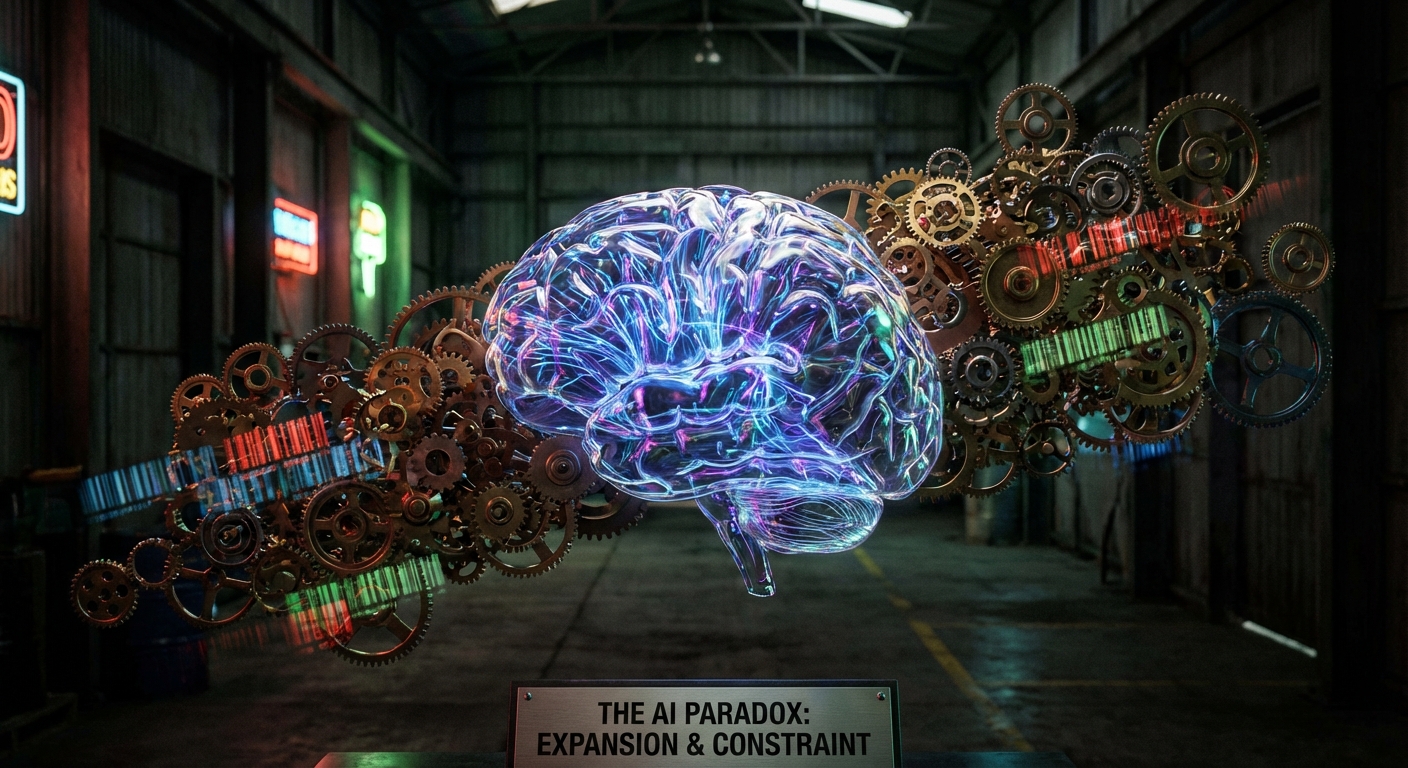
In this futuristic landscape, the company makes the bold decision to nearly double its workforce. But why? Moreover, why would that clean, minimalist free ChatGPT interface—currently handling billions of queries—suddenly open its doors to sponsored content? The answer lies in AI's profound transition from mere text generation to the era of "Autonomous Systems."
Sounding the Alarm in Silicon Valley: The Google Gemini Threat and the "Agentic" Response

Image: Sounding the Alarm in Silicon Valley: The Google Gemini Threat and the 'Agentic' Response
At the core of this scenario is the mounting pressure from Google’s advanced Gemini architecture. For OpenAI, the challenge is no longer just training a smarter model; it's about shifting AI from a passive, prompt-based tool into 'Agentic Workflows'—systems capable of executing complex tasks entirely on their own. The "Code Red" initiated by Sam Altman targets exactly this massive infrastructural leap.
However, tech giants know all too well that designing autonomous agents is only half the battle. Smuggling these highly complex systems through stringent corporate firewalls and seamlessly integrating them with legacy databases requires a colossal human effort.
Engineers Step Back, "Technical Ambassadors" Hit the Field

Image: Engineers Step Back, "Technical Ambassadors" Hit the Field
Projecting a headcount of 8,000 by the end of 2026 isn't just routine business scaling. The hiring focus pivots aggressively away from traditional AI engineers to a new breed of B2B roles dubbed "Technical Ambassadors".
In the enterprise market, many companies initially leaned toward Anthropic (Claude) for their early AI rollouts because the model natively aligned better with corporate data processing and compliance protocols. Enterprise integration is a notoriously grueling process. For instance, at NextFactor AI, our field experience deploying autonomous systems has shown us one undeniable truth: Clients don't just want a raw API key. They demand tailor-made architectures that weave into their existing ERP and CRM ecosystems, capable of reading cross-departmental data to make actionable decisions. OpenAI’s new army of Technical Ambassadors is being mobilized precisely to manage these intricate corporate integrations on a global scale.
A New Reality for Free Users: The Era of Autonomous Ads

Image: A New Reality for Free Users: The Era of Autonomous Ads
This strategic B2B pivot and the sheer weight of an 8,000-person roster come with a staggering "compute" and server bill. Even if your valuation soars into the hundreds of billions, the cash burn rate generated by Agentic systems simply cannot be subsidized by individual Plus subscriptions alone.
This is where the rules of the game fundamentally change: An action-oriented advertising model will be integrated into the free version of ChatGPT.
Traditional ad budgets, historically monopolized by search engines, will inevitably migrate directly to AI assistants. But these won't be your old-school banner ads. As the system maps out a travel itinerary for you, it will natively communicate with external APIs to embed highly contextual, instantly purchasable flight or hotel sponsorships right into the workflow as a natural parameter. Instead of spending hours sifting through search engines, users will consume highly accurate, sponsored "actionable ads" served up seamlessly by AI.
Are You Ready for the Autonomous Revolution?
OpenAI’s 2026 projection is clear evidence of exactly where the AI ecosystem is heading. While the company wages a relentless integration war against Anthropic in the enterprise arena, it is simultaneously gearing up to grab an aggressive slice of the digital advertising pie.
Will this massive corporate workforce and ad-supported autonomous ecosystem drive end-users toward open-source alternatives? In this hyper-fast technological evolution, will you remain a spectator, or will you rebuild your own business systems with autonomous agents? The time to decide is rapidly approaching.
🚀 Ready to Scale Your Business with AI?
At NextFactor AI, we develop custom autonomous solutions and 'Agentic Workflows' tailored to your brand. Schedule your free analysis consultation today.
Get a Quote Now →🚀 Ready to Scale Your Business with AI?
At NextFactor AI, we build bespoke autonomous solutions to supercharge your brand.
Get a Quote Now →