📊 Executive Summary & Technical Roadmap
Disney’s content ecosystem is pivoting from traditional production to Dynamic Creative Optimization (DCO) and programmatic video workflows. This analysis explores how static assets are being transformed into high-engagement video content through autonomous systems and AI-driven engineering.
- ● DCO Integration: Leveraging Disney’s Firework infrastructure to generate thousands of creative variations in seconds.
- ● Agentic Workflows: Utilizing Runway, LTX Studio, and HeyGen to automate the transition from static imagery to cinematic video.
- ● Strategic Context: The role of HoloTile technology in spatial data collection and hyper-personalized storytelling.
- ● Performance Metrics: Potential for video-centric automation to boost CTR by up to 40% (Wyzowl, 2024).
The Disney Model in Content Creation: Autonomous Video and Algorithmic Strategies
Disney’s content strategy is no longer just a product of creative intuition; it is the output of a sophisticated data engineering and automation ecosystem. To achieve global scalability across digital ad networks, the entertainment giant is minimizing manual design bottlenecks in favor of Algorithmic Content Generation. This shift provides a technical solution to the industry’s greatest hurdle: scaling high-quality creative without exponential costs.
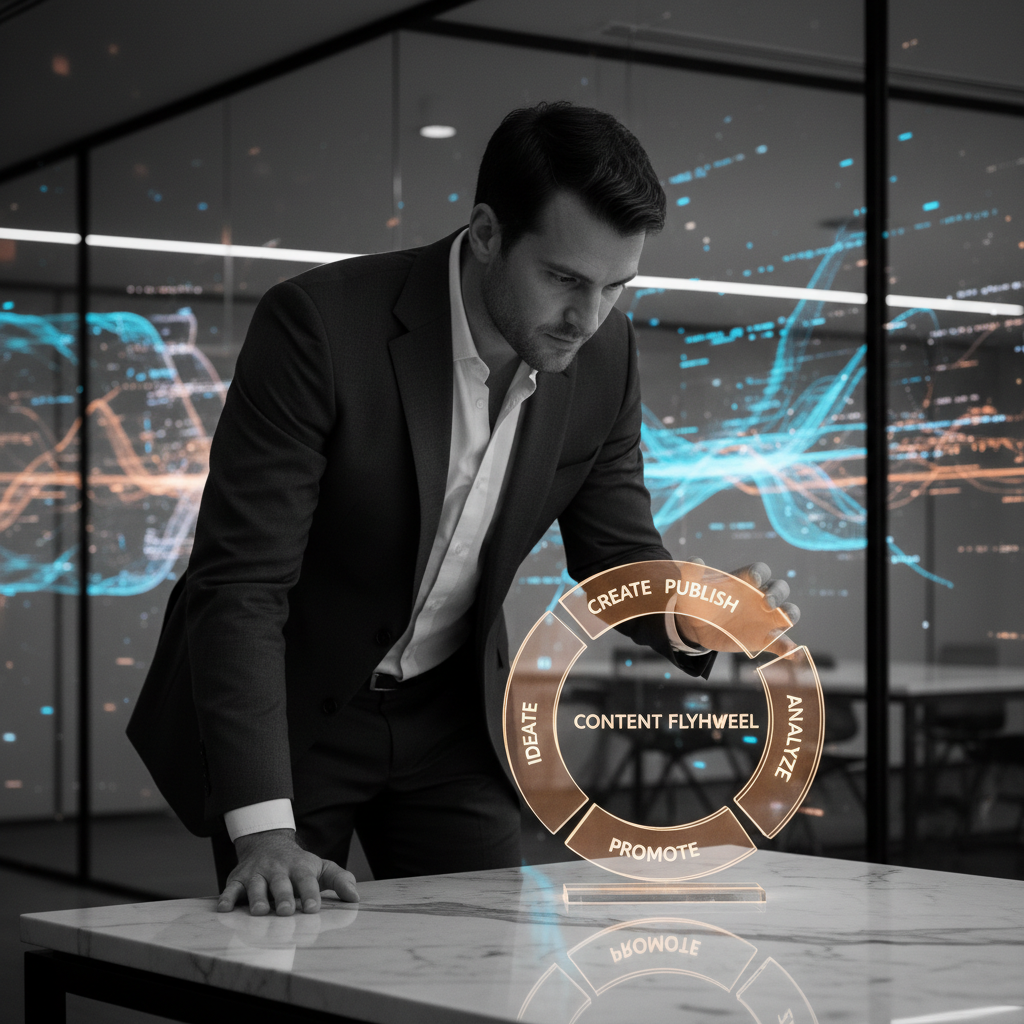
In today’s landscape, content production has evolved from a linear creative process into an "Agentic Workflow." Disney’s collaborations with platforms like Firework allow static assets to be dynamically converted into video formats using metadata. For everyone from e-commerce brands to enterprise service providers, this model slashes operational overhead while maximizing ad performance.

The Anatomy of Programmatic Video: DCO and Firework Integration
Disney’s AdOps capacity—reaching nearly 5 billion daily impressions—is a volume impossible to manage via traditional video production. The engine behind this scale is Dynamic Creative Optimization (DCO). By analyzing user data (location, interests, past behavior), DCO systems generate thousands of unique video variations from a single master template in real-time.
The Firework integration automates more than just distribution; it makes content interactive and "shoppable." Technically, this involves an API layer that pulls static images from a product inventory, merges them with predefined motion graphics templates, and overlays AI-based text-to-speech (TTS) narration.
"According to Wyzowl’s 2024 data, 88% of consumers crave more video content from brands. Converting static product imagery into video via DCO leads to an average 40% increase in Click-Through Rates (CTR)."
From Static Assets to Autonomous Video: Tools and Workflows
Your archive of static imagery isn't just a collection of files; it is the raw data for a high-velocity video pipeline. To turn these assets into a "video mint," an Agentic Workflow follows these core steps:
- Visual Analysis & Segmentation: Tools like Runway Gen-3 Alpha or LTX Studio extract depth maps to separate objects within a static frame.
- Narrative Generation: GPT-4-based models transform product value propositions into engaging video scripts.
- Temporal Consistency: Models like Stable Video Diffusion (SVD) animate static elements while maintaining brand integrity.
- Automated Post-Production: HeyGen and similar platforms add autonomous avatars or voiceovers tailored to the brand's persona to complete the personalization.

Bob Iger’s AI Vision and the Strategic Context of HoloTile
Disney CEO Bob Iger’s endorsement of AI integration isn't merely a cost-cutting measure. It is a strategic bridge between Spatial Computing and content creation. Disney’s HoloTile technology—an omnidirectional floor system—is designed to sync physical movement data with digital environments.
The link to content automation is direct: HoloTile and similar hardware generate massive datasets from user interaction. When fed into autonomous content engines, this data allows for "real-time rendered" video experiences tailored to the individual. Technology is shifting storytelling from a passive viewing experience into a dynamic, generative journey.
Conclusion: Your Roadmap to the Autonomous Content Factory
To replicate this level of efficiency, brands should adopt the following technical roadmap:
- Asset Audit: Finalize metadata tagging for all high-resolution static assets to make them "machine-readable."
- Pilot Automation: Use Runway or LTX Studio to build a pipeline producing at least 10 test videos per week from your existing catalog.
- Performance Benchmarking: Run A/B tests comparing DCO-based video ads against static ads, focusing on CTR and Conversion Rate.

At NextFactor AI, we make the advanced automation strategies used by Disney accessible to brands of all sizes. Our autonomous content workflows eliminate production bottlenecks, turning your visual archives into living ROI engines. We are ready to be your strategic partner in the data-driven content revolution.
🚀 Launch Your Autonomous Content Strategy
Discover NextFactor AI’s DCO and Agentic Workflow solutions. Optimize your production costs by up to 60%.
Explore the Case Study & Get Started →