
🚀 30-Second Executive Summary (TL;DR)
The Claude 4.5 ecosystem introduces the era of 'Token Economics,' allowing enterprises to optimize intelligence based on specific tasks. This analysis explores how Agentic Workflows and 'Effort Control' parameters drive technical depth and cost efficiency.
Claude 4.5 Family Breakdown: Optimizing Token Economics for Enterprise Scale
Strategic Overview
The era of raw compute in AI operations is ending; the focus has shifted to Token Economics and Unit Cost Optimization. This analysis explores the architectural leap expected with Anthropic’s Claude 4.5 ecosystem through the lens of autonomous systems and Agentic Workflow principles.
In the early days of cloud computing, many fell into the trap of 'over-provisioning' resources—a mistake being repeated today in LLM integrations. Many enterprises use the most expensive models for simple JSON formatting or data classification, which is akin to running a heavy-duty factory just to assemble a small toy. Success at enterprise scale now depends on managing intelligence as a raw commodity.
Anthropic's Claude 4.5 family offers a strategic framework that promises not just smarter intelligence, but more economical intelligence. The goal is no longer to throw the largest model at every task, but to use Agentic Routing to match the right task with the right cost profile.
1. Model Hierarchy: Task-Oriented Segmentation

Visual: Model Hierarchy and Task-Oriented Segmentation
When positioning Claude 4.5 models within enterprise architectures, we must view them as 'specialized units' within an autonomous system rather than static tools:
- Opus 4.5 (Strategic Reasoning): The conductor of multi-step Agentic Workflows. Use this only for critical decision nodes involving high cognitive loads, such as complex legal analysis or system architecture design, to minimize high token costs.
- Sonnet 4.5 (Operational Excellence): The backbone of enterprise productivity. It serves as the perfect balance for advanced coding and making sense of large datasets.
- Haiku 4.5 (High-Velocity Autonomous Systems): The true power of this model lies in delivering the reasoning capacity of the previous generation (Claude 3 Opus) with the economy of a Small Language Model (SLM). It is optimized for autonomous customer experience platforms handling thousands of transactions per second.
2. Effort Control: Dynamic Compute Management

Visual: Effort Control Parameter and Dynamic Compute Management
The Effort Control parameter expected in the Claude 4.5 documentation will directly impact operational costs. This feature allows developers to throttle or expand the model's System Prompt depth and Chain of Thought (CoT) reasoning steps via API.
For instance, in an Agentic Workflow, intermediate verification steps don't require the model's full 'brainpower.' By setting effort_level: low, the model can perform syntax checks while reducing token spend and latency by up to 40%. This acts as a safety valve against 'intelligence waste' in enterprise API calls.
3. Advanced Techniques in Token Economics
Visual: Advanced Techniques in Token Economics
Two pillars stand out in modern cost management:
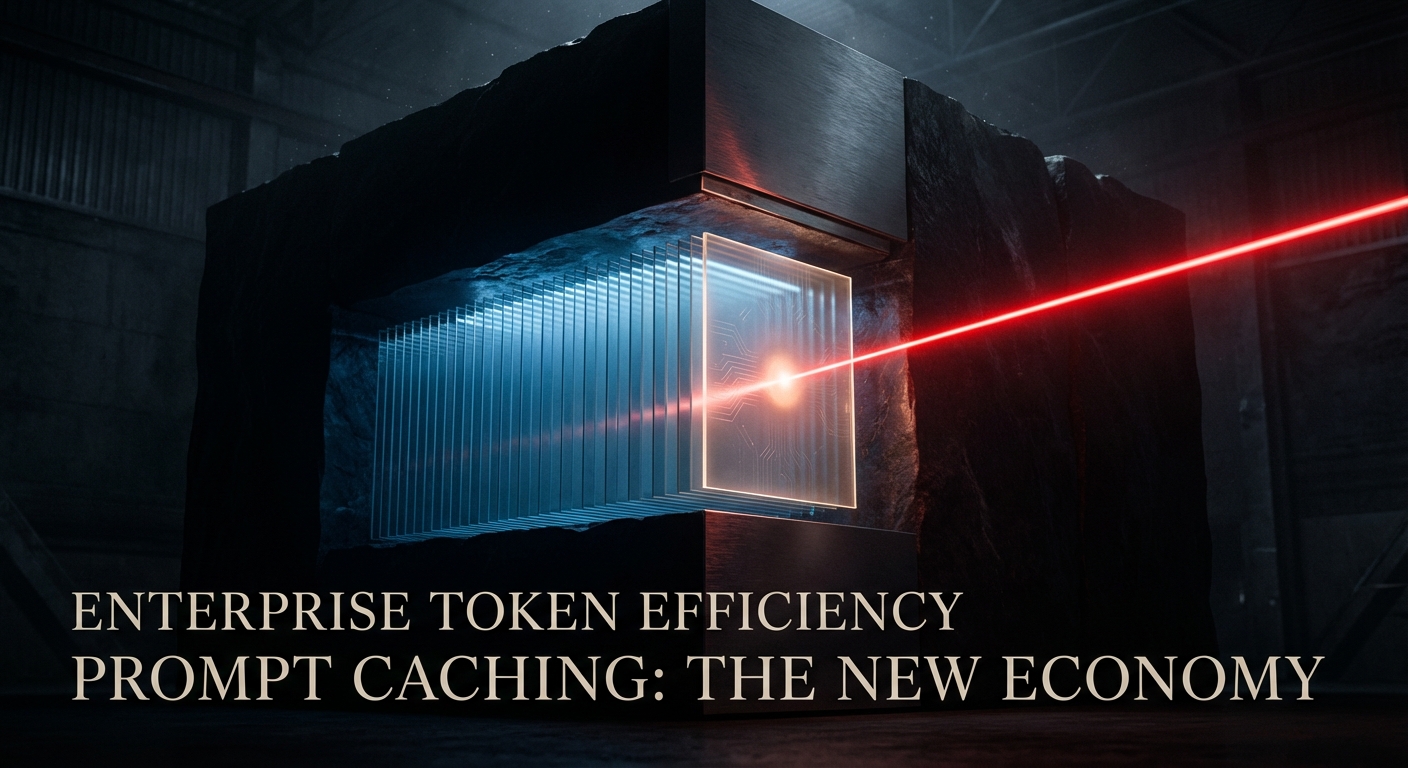
Prompt Caching (Contextual Memory): Reprocessing hundreds of thousands of lines of technical documentation for every query is a financial drain. Claude 4.5’s advanced caching mechanism prices static datasets at a 90% discount, making Retrieval-Augmented Generation (RAG) systems far more sustainable.
Batch API and Autonomous Queuing: For non-real-time analysis, using the Batch API can slash costs by 50%. This method is ideal for background data cleaning and sentiment analysis agents operating during off-peak hours.
4. Haiku 4.5 and the Power of Specialized Datasets
Why does Haiku 4.5 sometimes outperform larger models? The secret lies in Domain-Specific Fine-tuning and data density. For specific tasks like technical summarization or generating slide content, Haiku 4.5’s focused intelligence can achieve a 65% accuracy rate, whereas massive general-purpose models might get lost in the context and drop to 44%.
This proves that when 'purchasing intelligence' at scale, one should look at task-relevance rather than model size. Haiku is the high-octane fuel for low-latency autonomous systems.
The Vision: Multi-Model Routing and Agentic Layers
Companies no longer need to choose a single 'AI model'; they need to build an AI Orchestration. The future belongs to intelligent routers that analyze incoming requests and direct them to the most cost-effective Claude 4.5 variant. This isn't just about budget management—it's essential for system sustainability.
Optimize Your Token Economics
Our experts are here to help you achieve up to 60% cost savings in your AI operations and prepare your autonomous systems for the Claude 4.5 architecture.
🚀 Ready to Scale Your Business with AI?
At NextFactor AI, we develop custom autonomous solutions tailored to your brand.
Get a Quote Now →