🚀 30-Second Summary (TL;DR)
Software engineering is evolving from single-assistant interactions to the orchestration of autonomous expert teams using Claude 4 and Agentic Workflows. This article explores how MCP and 'Tool Use' are fundamentally transforming the development lifecycle.
A New Paradigm in Software Development: Autonomous Team Architectures with Claude 4
Software engineering is rapidly shifting from a syntax-driven discipline to one of system orchestration. The core challenge is no longer just writing code, but designing and supervising autonomous systems. Building on the foundation of Claude 3.5, the vision for Agentic Workflows in the Claude 4 era moves beyond single-model chats to the management of specialized sub-agents that communicate and collaborate.
In this new era, instead of expecting one Large Language Model (LLM) to do everything, leading architectures break tasks into micro-components and create specialized runtimes for each. This isn't just an assistant; it’s a digital twin of an entire engineering department—one that understands your codebase, writes its own tests, and patches security vulnerabilities autonomously.
Agentic Workflows: From Static Code to Dynamic Orchestration
Traditional LLM interactions rely on a linear "Prompt-Response" loop. The autonomous revolution expected with Claude 4 combines Tool Use (Computer Use) with 'Agent Teams.' In this architecture, when the primary model (Orchestrator) receives a complex engineering request, it follows these technical steps:
Based on our automation projects at NextFactor AI, we’ve observed that productivity gains stem less from the model’s raw intelligence and more from its ability to delegate. The process works as follows:
- Analysis and Planning: The primary model accesses the entire file system and documentation via the Model Context Protocol (MCP).
- Sub-Agent Spawning: Specialized agents—such as a security agent using SAST tools and a QA agent responsible for unit tests—are spun up in parallel.
- Iterative Loop: These agents manipulate files via CLI tools like Claude Code, read error logs, and iterate until a verified solution is reached.
Model Context Protocol (MCP) and the 1-Million Token Advantage
Visual: Leveraging MCP and massive context windows for holistic reasoning.
For AI to truly master a software project, context constraints must vanish. The expanded context window in next-gen Claude models doesn't just mean reading more text; it means bringing the entire dependency tree of a project into the reasoning space at once.
Especially in legacy system modernization, Claude 4’s ability to view the system architecture holistically minimizes the risk of "breaking a module while changing a function." The Agentic Workflow approach filters this massive data, sending only relevant snippets to sub-agents, optimizing both cost and accuracy.
External Integration: Firecrawl and Dynamic Data Feeds
Visual: Integrating real-time data for autonomous updates.
Static knowledge is a bottleneck for AI when dealing with updated API docs or library releases. By integrating Claude with API-based crawlers like Firecrawl, the system can autonomously fetch live data from the web.
For instance, when migrating to a new library version, agents can automatically scrape the latest documentation, identify breaking changes, and apply fixes to the existing code. This is a professional application of Claude’s Tool Use capability, rather than a built-in static feature.
Case Study: Autonomous Refactoring with Claude Code
Visual: Claude Code CLI in an autonomous refactoring cycle.
The `claude-code` CLI tool functions far beyond a basic assistant. During technical audits, we observe the following patterns:
- Discovery Phase: The model scans directory structures using `ls` and `cat`, identifying critical functions with `grep`.
- Action Phase: It directly modifies files via `edit_file` and simultaneously validates changes by running `npm test`.
- Reporting: All changes are formatted into a Pull Request (PR) for human review.
This process transforms the software engineer from a "coder" into an "orchestrator" and "approver" (human-in-the-loop), focusing on strategy and quality control.
Security and Governance: Supervising the Agents
Autonomous code modification carries inherent risks for enterprises. Therefore, Agent Teams must be built on verifiability. Governance layers like `claude-flow` log every step and enforce human approval for critical actions. At NextFactor AI, we bridge the gap between AI speed and corporate security standards through these verification layers.
Conclusion: The New Standard of Engineering
Claude 4 and the advanced agent architectures following it are democratizing software development while simultaneously raising the bar for professionalism. The engineer of the future will not be the one writing thousands of lines of manual code, but the architect managing an army of autonomous agents to optimize security, performance, and user experience.
Integrating this AI-driven transformation into your corporate workflow is no longer optional—it is a strategic necessity.
Transition to the Future of Software Architecture Today
We modernize your business processes with agentic workflows and autonomous AI solutions. Contact our expert team for technical consulting and implementation.
Request a Strategic Analysis →🚀 Ready to Scale Your Business with AI?
At NextFactor AI, we develop custom autonomous solutions tailored to your brand.
Get a Quote Now →🚀 30-Second Summary (TL;DR)
This section analyzes the evolution of AI into autonomous 'agent' systems through Anthropic's 'Computer Use' capability, detailing technical risks such as pixel coordinate estimation and multi-agent loops.
- ● Computer Use is an 'Action Tokenization' process that converts visual screenshots into JSON-based coordinate commands.
- ● Agentic Workflows allow AI to move beyond answering questions to executing autonomous tasks with Error Recovery mechanisms.
- ● High latency and security risks like 'Prompt Injection' remain the primary technical barriers to mass adoption.
The era of AI as a simple 'chatbot' is rapidly giving way to 'Action-Oriented AI.' While Anthropic hasn't officially numbered it 4.6, the 'Computer Use' capability introduced in Claude 3.5 Sonnet lays the groundwork for the autonomous architecture of 4.0 and beyond. This analysis dives into the technical backend of why this is an 'infrastructure revolution' rather than a mere marketing gimmick.
From Pixels to Action: The Mechanics of 'Computer Use'
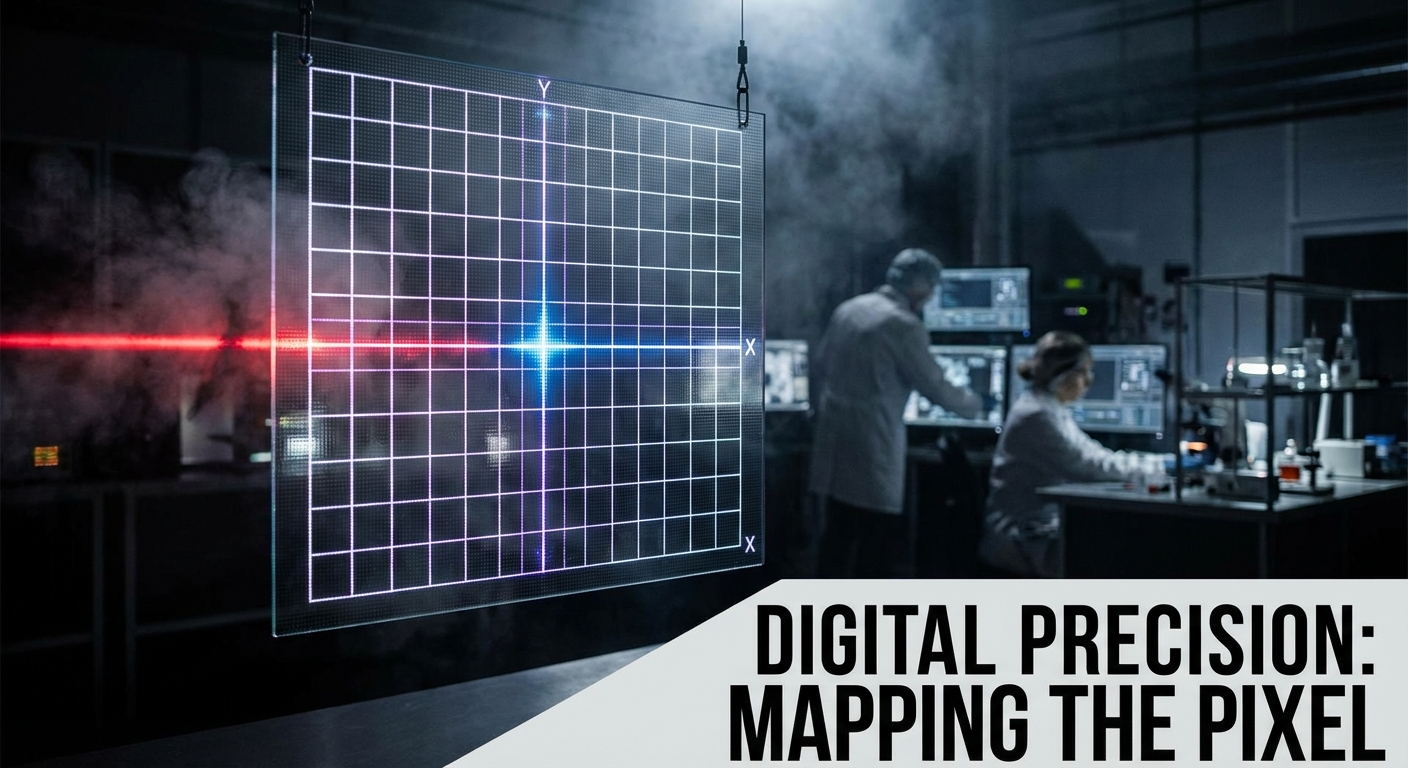
Visual: The translation of visual data into mathematical coordinates.
Claude’s ability to use a computer isn't an 'eye' watching the screen in real-time. Technically, the system takes screenshots, analyzes the pixels, and maps them to an (x, y) coordinate system. The model doesn't just recognize a button; it predicts its exact location to generate JSON commands like 'left_click.'
The critical term here is 'Action Tokenization.' Claude attempts to understand the UI not just visually but hierarchically. However, latency remains a significant hurdle. Sending screenshots via API, processing them, and generating coordinates is still far from a real-time user experience, positioning the tech currently as a 'background task manager' rather than a 'speed demon.'
Agentic Workflow: Strategy Over Commands
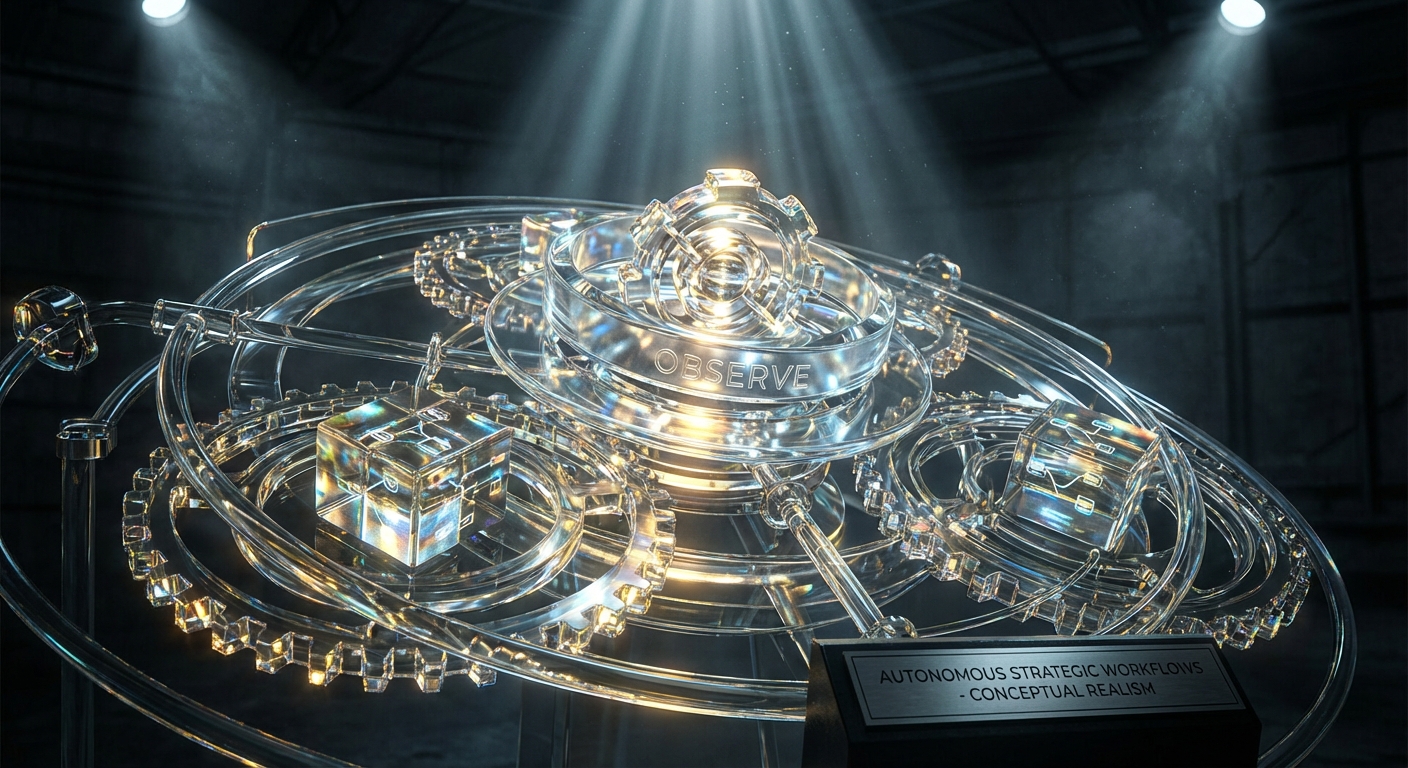
Visual: The 'Observe-Plan-Execute' cycle in autonomous agents.
AI autonomy relies on the 'Agentic Workflow' loop. In this cycle, the model breaks down a goal (e.g., 'Create a presentation using this Excel data and email it') into sub-tasks. Claude then runs an 'Observe-Plan-Execute' loop at every step.
The biggest challenge is 'Error Recovery.' If the model clicks the wrong button or a pop-up disrupts the plan, it must detect the deviation and self-correct without 'hallucinating.' Current benchmarks show success rates around 90% for simple tasks, but they drop significantly in complex, nested interfaces.
Case Study: Multi-Agent Architecture and WhatsApp AI Integration
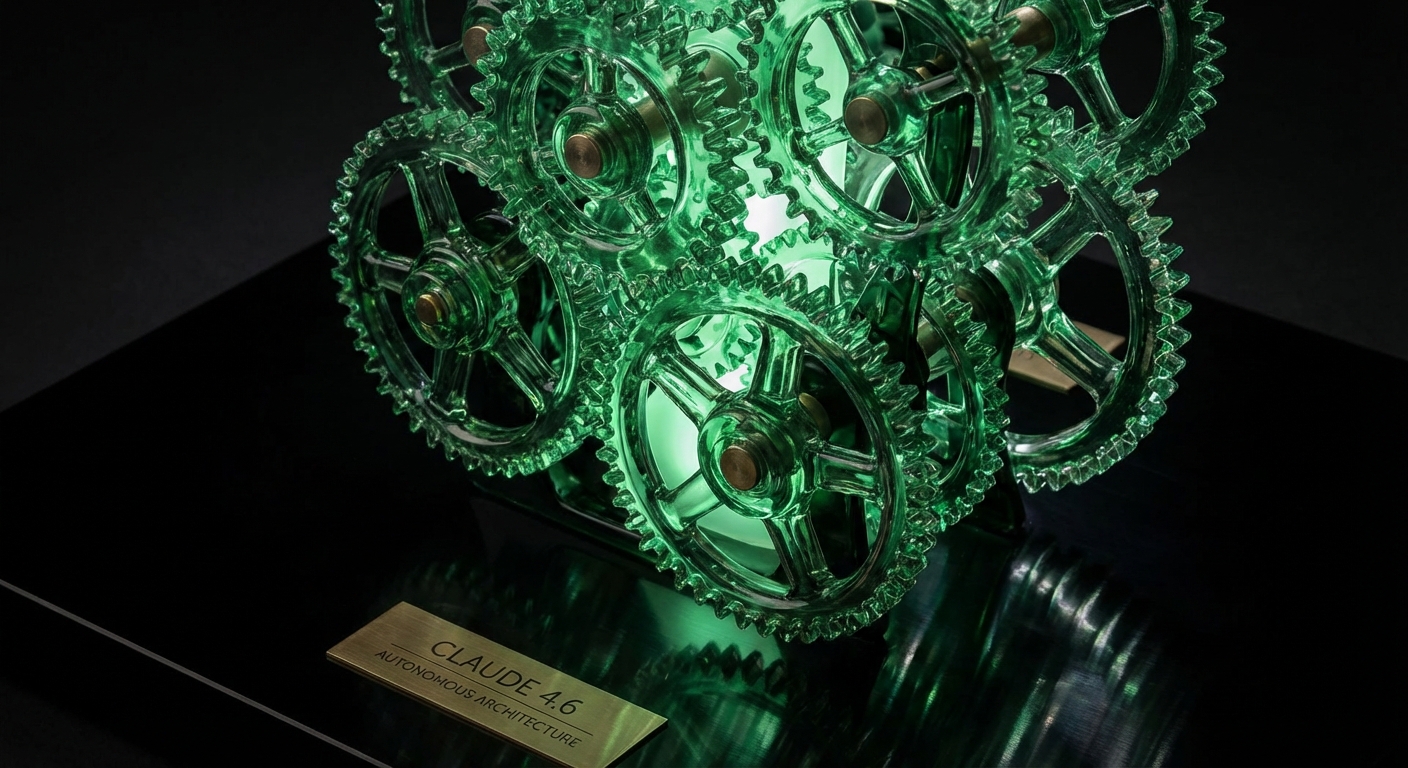
Visual: Distributing tasks across specialized AI agents.
At NextFactor AI, we've found that 'Multi-Agent Systems' (MAS) are far more efficient than a single agent trying to do everything. In our WhatsApp AI projects, one agent classifies user messages, another prepares database queries, and a third triggers the relevant API.
When combined with Claude 3.5 Sonnet's wide context window, this allows the system to manage not just the current message but the entire conversation history and business logic autonomously. However, transparency is key: AI taking 'human-like' initiative still requires strict guardrails to prevent it from accidentally deleting data by clicking the wrong coordinate.
Technical Risks: Prompt Injection 2.0
The darker side of 'Computer Use' is security. A hidden, invisible prompt on a website could manipulate Claude the moment it 'sees' the page. This makes 'Constitutional AI'—the filter that tells a model 'don't trust everything on the screen'—Anthropic's most vital technical challenge.
In summary, we don't have a magic wand yet. We have a first-generation autonomous operator that can turn pixels into math and reason through steps, but it remains slow and prone to error. The future belongs to those who turn today's software interfaces into 'agent interfaces' as these models become faster and more secure.
🚀 30-Second Summary (TL;DR)
Claude's anticipated 4.6 architecture focuses on transforming AI from a basic assistant into an autonomous partner through advanced self-correction and massive context windows.
- ● Agentic Workflow: Autonomous processes where the AI manages its own error cycles.
- ● Self-Correction: The model's ability to logically and technically audit its own outputs.
- ● Context Retrieval: High-accuracy data extraction across 1-million+ token windows.
- ● Human-in-the-loop (HITL): Integrating autonomous systems with responsible engineer oversight.
As the AI ecosystem transitions from text generation to 'action generation,' the industry is focused on Anthropic's future vision (the Claude 4 series and prospective 4.6 iterations). These next-gen architectures promise more than just higher parameter counts; they promise Agentic Workflows and advanced self-correction.
Agentic Workflow: Shifting from Assistant to Autonomous Workforce
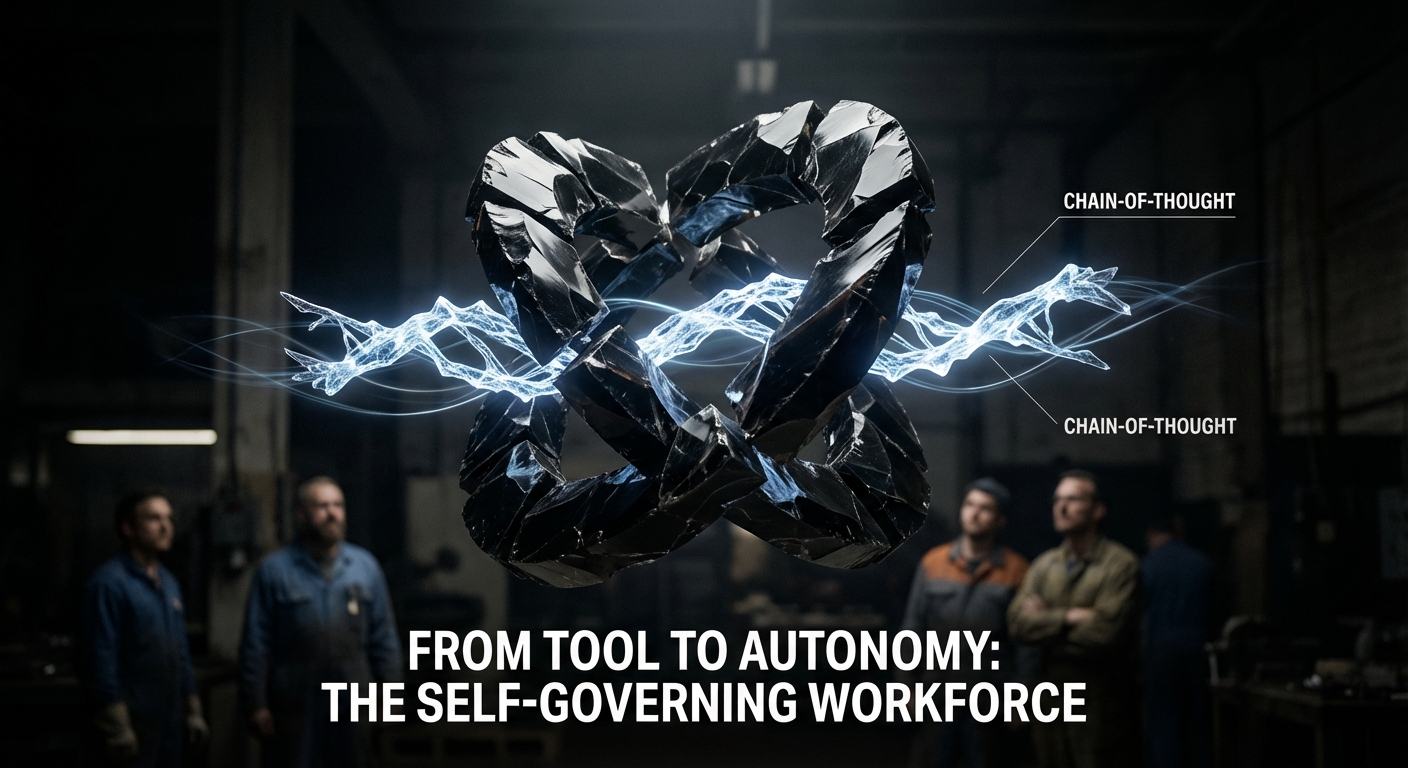
Visual: The evolution of AI from Q&A loops to complex goal execution.
The most striking change in expected Claude iterations is the model's ability to make autonomous decisions within a 'Chain-of-Thought.' In Agentic AI, the model doesn't just write code; it tests it in a sandbox, reads the logs, and completes iterations without human intervention.
The critical threshold here is Self-Correction. Advanced models like Claude 4.6 are expected to optimize 'Thinking Step' costs, solving errors at the source in high-complexity systems.
Case Study: NextFactor AI Implementation
At NextFactor AI, we test autonomous agents in financial forecasting. With next-gen Claude capabilities, our systems no longer just 'detect errors'; they analyze root causes and present a 'suggested fix' with completed tests to the developers. This is an automation revolution—human-approved, but AI-driven.
1 Million Tokens and Beyond: The RAG Killer?

Visual: Massive context windows simplifying knowledge management.
Massive context windows are revolutionary for long-document analysis. But the true revolution is 'Retrieval Quality.' Achieving 99% success in 'Needle-in-a-Haystack' tests within a 1-million token window means fitting an entire company's memory into a single prompt.
This could reduce the complexity of traditional RAG (Retrieval-Augmented Generation) systems. Instead of chunking data into vector bases, the model’s direct mastery of all technical documentation will significantly increase 'Architectural Consistency.'
Responsible Autonomy: Rewriting the 3:00 AM Scenario
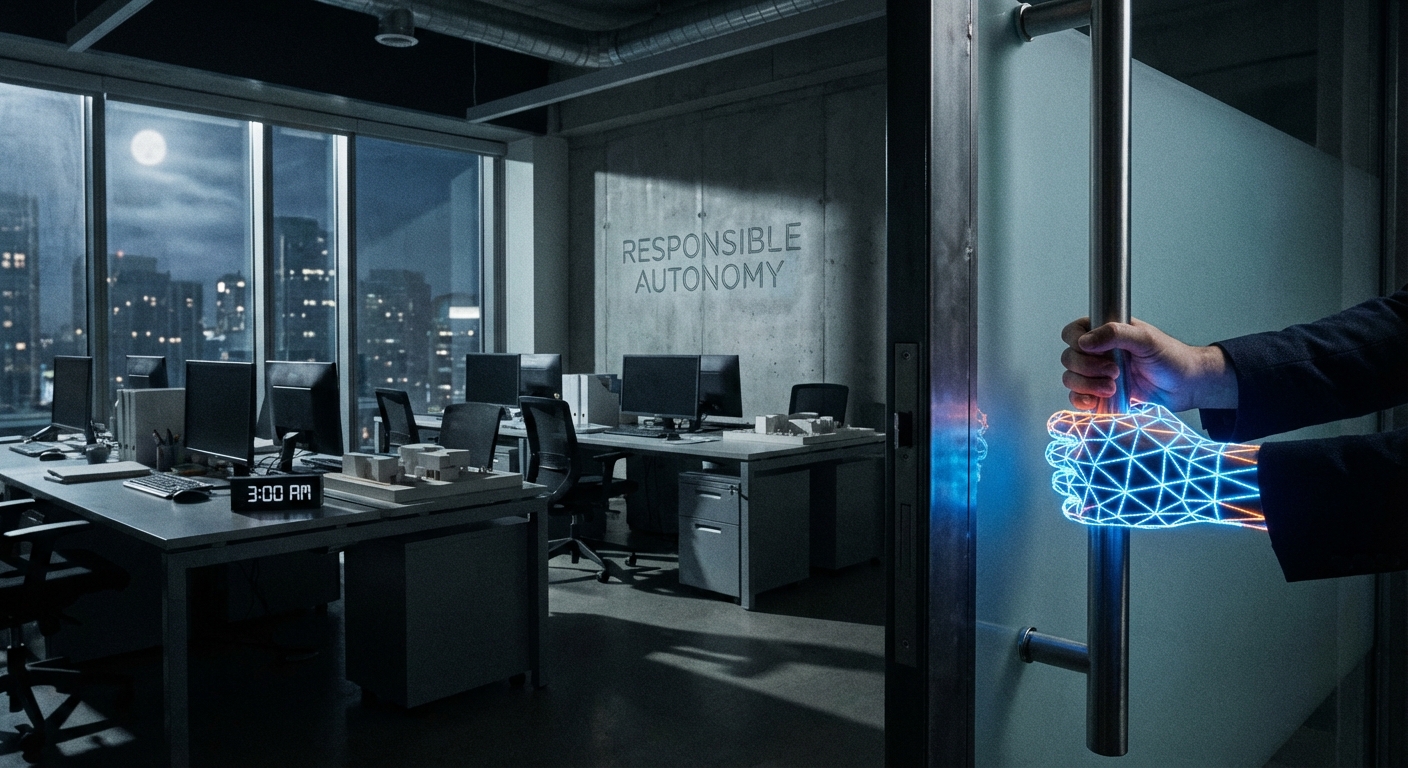
Visual: AI as the ultimate first responder for engineering teams.
A common misconception is that AI will take over everything alone. For a CTO, reality is different. In the Claude 4.6 vision, if a system error occurs at midnight, the AI doesn't 'deploy to prod' blindly. Instead, it:
- Isolates the failing module.
- Analyzes logs to find the root cause (NullPointerException, Memory Leak, etc.).
- Prepares fixtures and unit tests.
- Presents the patch for human engineer approval.
This is intelligent supervision. The AI doesn't replace the engineer; it clears 90% of the workload so the engineer wakes up to a solution rather than a crisis.
Conclusion: AI as a Strategic Partner
Claude Opus 4.6 or any future flagship model won't just be a 'smarter chatbot.' These models are strategic partners embedded in corporate processes, capable of managing Technical Debt and understanding complex architectures. In our NextFactor AI projects (like NeuroVoice and SynapTalent), we place this autonomous capacity at the center, building systems that don't just use technology, but manage it.
🚀 Build the Architecture of the Future Today
Meet our expert team to integrate AI autonomy into your business processes. Start the transformation with NextFactor AI.
Request Technical Analysis →