The AI Chip Revolution: Powering Next-Gen Autonomous Systems with ASML & TSMC
As the global technology ecosystem is reshaped by the transformative power of artificial intelligence, the semiconductor industry—the very foundation of this revolution—is experiencing unprecedented momentum. At the heart of this AI-driven surge are industry giants like ASML, the leader in chip manufacturing tools, and TSMC, the indispensable producer of advanced chips. This robust hardware infrastructure is simultaneously paving the way for the development of next-generation AI applications, including Agentic Workflows and Autonomous Systems.
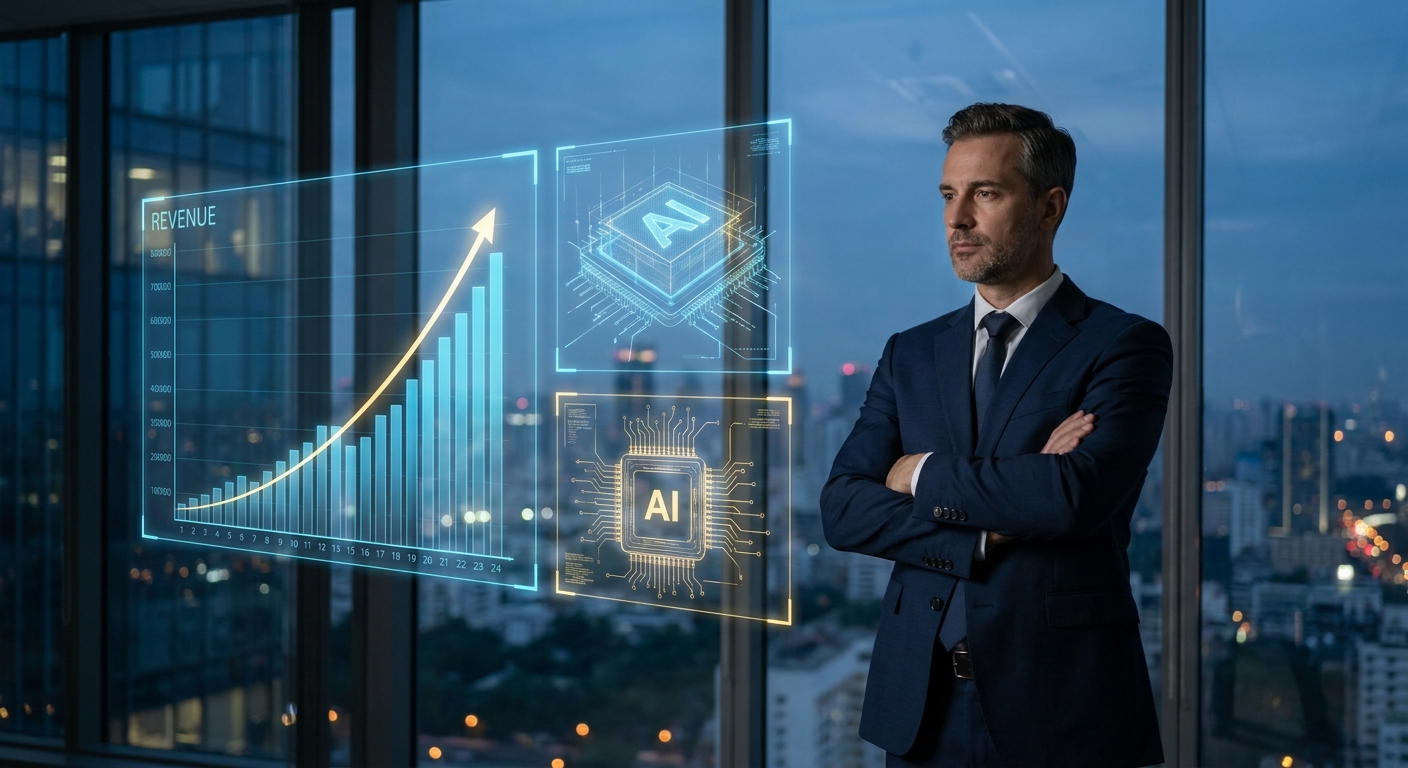
This explosion in the hardware sector is also having a significant ripple effect on the market for AI-powered software and services. The achievement of innovative companies like Hightouch reaching $100 million in Annual Recurring Revenue (ARR) stands as a concrete testament to this ecosystemic growth. AI is no longer just a technological trend; it is a comprehensive transformation redefining the entire value chain.
Core Dynamics of the Semiconductor Industry: The Success of ASML and TSMC

Image: Core Dynamics of the Semiconductor Industry: The Success of ASML and TSMC
The processors forming the brain of artificial intelligence are the most critical components of this transformation. The production of these chips is a complex process requiring high precision and integration.
ASML: The Arbiter of Chip Manufacturing Technology
Netherlands-based ASML is the undisputed leader in machines used to produce the world's most advanced semiconductors. With its near monopoly in Extreme Ultraviolet (EUV) lithography technology, ASML is not merely a company but a barometer guiding the technological advancement of the entire chip industry. According to recent quarterly reports, the company announced record earnings, exceeding analyst expectations, and raised its annual revenue forecast to a range of €36 billion to €40 billion. The remarks from CEO Christophe Fouquet encapsulate the robust outlook for the sector:
"The growth outlook for the semiconductor industry continues to solidify with ongoing AI-related infrastructure investments."
This situation indicates a strong growth potential not only for ASML but for the entire semiconductor ecosystem. The increasing demand for AI applications is outstripping supply, and customers are investing in ASML's advanced technology machines through long-term agreements. In AI automation projects, an in-depth analysis of data centers' processing power needs reveals how companies like ASML are building this critical infrastructure and its impact on the industry. The intensive processing power required for High-Performance Computing (HPC) and Agentic Workflow-based systems, in particular, further increases dependence on ASML technologies.
TSMC: The Global Foundry for Advanced AI Chips
With the advanced manufacturing tools provided by ASML, TSMC (Taiwan Semiconductor Manufacturing Company) plays a pivotal role in producing high-performance chips. The reliance of tech giants such as Nvidia, Apple, and AMD on TSMC for their advanced AI chips and processors is central to global technology strategies. According to recently announced first-quarter results, TSMC achieved a record-breaking net profit, surging by a remarkable 58% to reach 572.5 billion New Taiwan dollars (approximately $18.2 billion). This marks the eighth consecutive quarter of double-digit growth, and the company's annual revenue forecast has also been revised upwards.
This success is underpinned by intense demand for 3-nanometer technology and advanced packaging solutions. These cutting-edge chips are indispensable, especially for large language models (LLMs) and complex Autonomous Systems, constituting a quarter of TSMC's sales since their 6% share in the third quarter of 2023. As Nvidia CEO Jensen Huang noted, "the entire technology world believes they can advance their AI and increase their revenue if they had more capacity." In line with this, TSMC is demonstrating its commitment to meet this immense demand by increasing its 2026 capital expenditures to $52-56 billion, in addition to new factory investments in Arizona and Japan.
Technological Momentum and Capacity Dynamics: The Evolution of Transformation

Image: Technological Momentum and Capacity Dynamics: The Evolution of Transformation
This AI-driven transformation is not only accelerating financial indicators but also the pace of technological development. The demand for advanced processors needed to train large language models, perform inference processes, and support Agentic Workflow architectures is continuously increasing. This creates a self-reinforcing cycle of continuous innovation within the semiconductor industry.
The integration between High Bandwidth Memory (HBM) and EUV lithography is one of the most critical areas in this innovation race. SK Hynix's €8 billion deal with ASML vividly illustrates how rapidly memory manufacturers are adopting EUV technology. Investments in High-NA EUV technology, vital for the most cutting-edge chips, are also progressing relentlessly. Cloud service providers like Microsoft, Meta, and Amazon planning to spend over $600 billion on data centers this year clearly reveal the scale of global demand for these technologies.
However, current production capacity struggles to meet this surging demand. This situation necessitates expertise not only in software but also in optimizing and scaling the underlying infrastructure on which these software solutions will run. Even the most advanced AI algorithm cannot fully realize its potential without sufficient and efficient processing power. Especially with the proliferation of Autonomous Systems, factors such as energy efficiency and low latency are becoming even more prioritized in chip design and production.
The Rise of AI-Powered Applications: The Hightouch Case Study
Image: The Rise of AI-Powered Applications: The Hightouch Case Study
The AI transformation is not only benefiting hardware manufacturers but also paving the way for a new generation of software and services. This massive processing power is enabling the development of entirely new AI applications and platforms.
In this context, companies like Hightouch are attracting significant attention. As a data activation platform that effectively leverages AI technologies, Hightouch's achievement of $100 million in Annual Recurring Revenue (ARR) is a concrete demonstration of how dynamic and lucrative the AI-powered software ecosystem has become. This success shows that AI is creating value not just in massive server farms, but also in practical applications that optimize business processes, personalize customer experiences, and strengthen decision-making. Platforms that process customer data in real-time to create personalized Agentic Workflows, in particular, play a critical role in providing a competitive advantage.
The potential of AI-powered personalization and data activation solutions to transform user experience and business efficiency is observed across the industry. Hightouch's success is merely the beginning of this potential. Turning data into action with AI has become key to gaining a competitive edge and increasing customer loyalty.
Future Challenges and Expectations: Hurdles on the Path of the AI Era
Every major technological transformation comes with its unique challenges, and the AI era is no exception. Pressure is mounting on large technology companies to deliver tangible and measurable returns from their AI investments. Furthermore, there are some uncertainties regarding how sustainable this rapid increase in chip spending will be.
Geopolitical risks also remain a significant concern. The potential for tensions in the Middle East to impact the supply chain of critical materials for semiconductor production, such as helium and neon, is being closely monitored. However, TSMC has stated it is prepared for such risks through strategies like working with multiple suppliers and building safety stocks. This illustrates how interconnected the global economy is and the potential impact of regional events on global supply chains.
Macroeconomic factors also play a crucial role. UBS analysts warn of potential weakening in consumer demand due to global memory chip shortages and high prices. However, with TSMC's leadership in advanced-node technology and the strong support of AI demand, expectations for continued revenue growth in the coming quarters remain robust. Especially the proliferation of Autonomous Systems and advanced AI models will support the sustainability of this demand.
Conclusion: On the Cusp of an Irreversible Transformation in the Age of AI
The recent record financial performances announced by ASML and TSMC, combined with the rise of AI-powered tools like Hightouch, clearly demonstrate that AI's transformative impact on technology and the business world is only just beginning. This comprehensive transformation is far more than a temporary hype; it represents an irreversible change supported by concrete economic data.
Despite existing challenges such as capacity constraints, geopolitical risks, and macroeconomic uncertainties, AI innovation and investments in this field will continue unabated. In the coming period, it is foreseeable that this technological race will continue to create new opportunities and challenges in both hardware and software layers. Advanced AI approaches like Agentic Workflows and Autonomous Systems will be the most prominent indicators of this change.
For any organization seeking to be part of this transformation, stay ahead in the competition, and shape the future, closely monitoring developments in the AI ecosystem and taking strategic steps is vital. The business world is repositioning itself to maximize the potential offered by artificial intelligence.
🚀 Ready to Grow Your Business with AI?
At NextFactor AI, we develop custom autonomous solutions for your brand. Schedule a free analysis call now.
Get a Quote Now →